The best screen-free educational activities for preschoolers need three things: a clear job, ordinary household materials, and room for the child to make choices. Start with 15 to 20 minutes, stay nearby, and stop while the activity still feels fun. Five simple games can cover early math, language, science, movement, and problem-solving without turning your living room into a classroom.
Use the activities below in any order. A child who is tired may need sorting or water play, while an energetic child may learn more from a building challenge. The goal is active thinking, not perfect results.
Set Up a Screen-Free Learning Station in 10 Minutes
My recommendation: create one small learning station instead of spreading materials across the whole house. A defined space helps preschoolers understand what to do and makes cleanup short enough to repeat tomorrow. A kitchen table, a washable mat, or one clear section of the floor works well.
Choose one learning job
Put out materials for one task only. For counting, use 20 bottle caps, paper squares, or toy foods. For storytelling, use three safe objects and a small box. For science, use two bowls, a spoon, and water. Keep extra items out of sight. Too many choices can turn a five-minute setup into a hunt for the most exciting object.
Write the learning job in one short sentence: “Count five apples,” “Build a bridge,” or “Find three rough things.” The sentence gives you a calm prompt when your child asks what to do. It also keeps the activity focused without requiring worksheets.
Prepare a reset tray
Use four containers labeled with simple pictures: things to use, things to count, things to put away, and things that need an adult. Include a cloth for spills and a timer that runs for 15 minutes. Keep small objects away from children who still put items in their mouths. Check every item for sharp edges, loose parts, and choking risks before play begins.
Begin with a demonstration that lasts less than one minute. Then hand over the task. The child should do most of the touching, moving, guessing, and talking. Verdict: a small station with one clear job beats a large pile of educational materials because it gives preschoolers a starting point and a natural stopping point.
Make a Pretend Grocery Shop for Early Math
This activity turns counting into a useful household game. Place five to ten pretend foods, clean empty packages, or paper food pictures on a table. Add a small basket and make simple price cards from 1 to 5. You can write the cards by hand. A box of Crayola Ultra-Clean Washable Markers, 10-count, works well for making bright cards because the ink washes from many smooth surfaces, but any washable marker is enough.
Give the shop one math job at a time
Start as the customer. Say, “I need three items. Can you put three in my basket?” Count slowly while your child places each item inside. Then ask the child to check the order. Move from one-to-one counting to comparing: “Who has more, the basket with four items or the basket with two?” Avoid correcting every mistake immediately. Touch each object and recount together.
| Stage | Child’s task | Skill practiced |
|---|---|---|
| 1 | Put three foods in a basket | One-to-one counting |
| 2 | Match number cards to groups | Number recognition |
| 3 | Find one more item | Addition language |
| 4 | Remove two items | Early subtraction |
| 5 | Sort foods by color or type | Classification |
Raise the challenge without adding pressure
After the first round, give your child a shopping list with pictures: two red foods, one round food, and one item that starts with the sound “b.” Let the child become the cashier and check your basket. If the number cards are confusing, remove them and return to physical groups. If pretend money causes frustration, skip it. The learning target is quantity, not a perfect shop role-play.
Best choice: use real objects or homemade cards before buying a toy cash register. Preschoolers learn the same counting ideas with less setup, and you can change the game to match the child’s current level.
Turn a Walk Into a Nature Sorting Game
A short walk can become a science lesson when the child has something specific to notice. Choose a safe route around the yard, balcony, or sidewalk. The child does not need to collect anything. Looking, pointing, comparing, and describing are enough.
Follow this five-step observation game
- Choose one feature. Ask the child to find things that are green, rough, smooth, round, long, heavy-looking, or smaller than a hand.
- Set a small target. Find three examples instead of trying to examine everything outside.
- Compare two items. Ask which leaf is wider, which stone looks darker, or which stick is longer.
- Make a guess. Ask what might happen if a dry leaf gets wet or if a shadow moves later.
- Report back at home. Draw one object or describe it to another family member.
Keep the activity safe and respectful
Do not let children taste plants, touch mushrooms, pick unknown flowers, or handle animal droppings. Avoid nests, stinging insects, and areas treated with garden chemicals. Wash hands after the walk. If you bring in a leaf or stone, check it for insects and return it outdoors when the activity ends.
Ask questions that have more than one possible answer. “What do you see?” invites better thinking than “Is this a leaf?” When your child says a stone is heavy, ask, “Heavy compared with what?” That small follow-up teaches observation without making the walk feel like a test.
Verdict: the nature sorting game is the best choice for a child who needs movement before sitting down. It builds vocabulary and early science skills with no special equipment and no pressure to produce a craft.
Build Stories With Objects, Pictures, and Sound
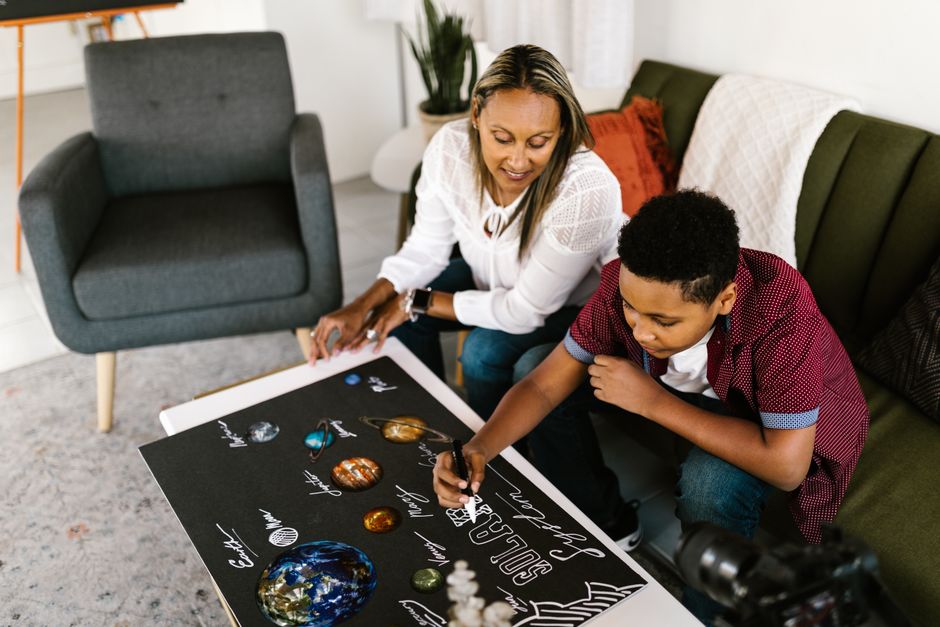
Storytelling does not require a book, a reading app, or a child who can read. Three objects can become a character, a place, and a problem. This game strengthens vocabulary, memory, sequencing, and listening. It also gives shy preschoolers a way to speak through pretend characters.
What counts as a story?
A story has a beginning, something that changes, and an ending. Put a spoon, a sock, and a small box in front of your child. You might begin: “The spoon lived in the box. One morning, it heard a strange sound.” Then hand the story over. Let the child decide what made the sound and where the spoon goes next.
For children who need support, offer two choices instead of a blank question: “Did the spoon meet a bird or a bear?” After the child chooses, ask for one detail. “What color was the bird?” This keeps the conversation moving while still leaving room for imagination.
How can objects support early reading?
Use a Melissa & Doug Pattern Blocks and Boards set, listed as a 120-piece set, for a different version of the game: build a simple picture, then tell a story about it. The branded set is optional; paper shapes work just as well. Point to each shape and describe its position: above, beside, inside, under, or between. These location words prepare children to understand directions and picture-book language.
What if the child will not tell a story?
Let the child act instead. Make the sock talk, have the spoon knock on the box, or ask the child to create sound effects. Repeat the child’s words in a fuller sentence without demanding that the child copy you. If the child says, “Bear go,” you can answer, “Yes, the bear goes into the blue box.” Verdict: begin with objects and movement, then add questions. The best story activity feels like play first and language practice second.
Use Blocks to Teach Planning and Simple Engineering
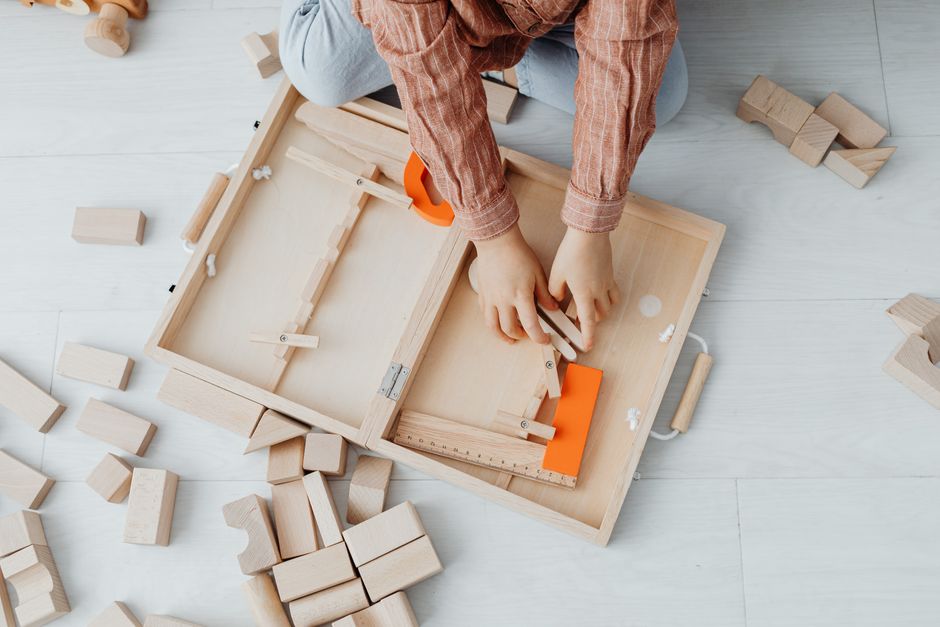
Choose a building problem, not a model to copy. A preschooler learns more from trying to make a bridge hold three toy animals than from copying a finished tower. The problem gives the child a reason to plan, test, change, and try again. Those four actions are the heart of early engineering.
Set a clear building challenge
Say, “Build a bridge between these two books. The bridge must hold one block.” After the first attempt, add one condition: it must hold three blocks, stand at least 10 centimeters above the floor, or use only 12 pieces. Keep the challenge small enough to solve in 10 minutes. If the task is too easy, change one rule rather than giving a long explanation.
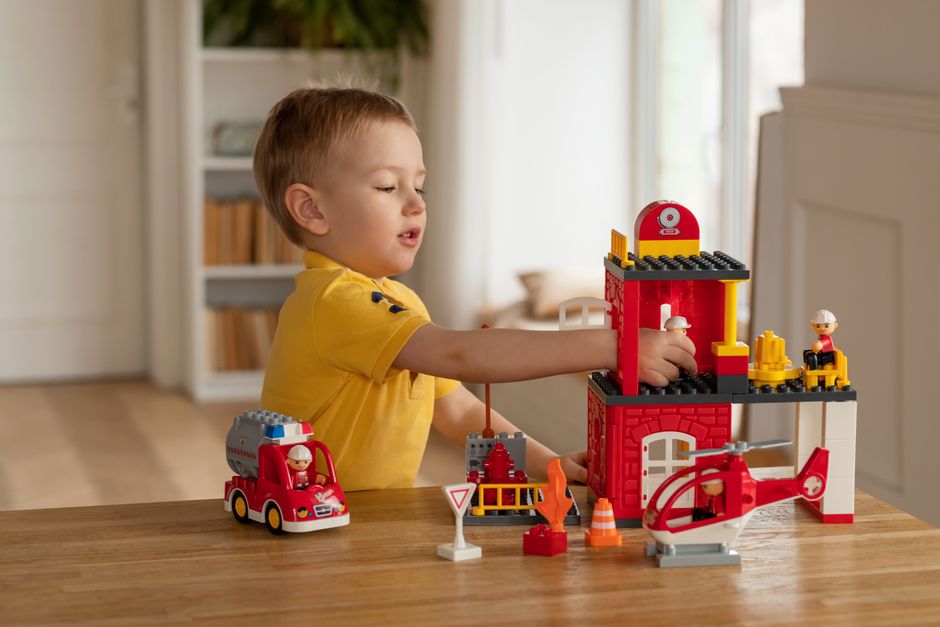
LEGO DUPLO Number Train, a 23-piece set, can work for children who already enjoy large building pieces and number play. Use the numbered bricks for a bridge-load challenge or a train station. The set is not required; cardboard tubes, wooden blocks, plastic cups, and folded paper provide useful tests too. Large pieces are safer for younger preschoolers than tiny construction parts.
Ask questions that reveal the plan
Do not rebuild the structure for the child. Ask, “Which part is leaning?” “What could make the bottom wider?” or “What changed when you added the third block?” These questions direct attention to cause and effect. If the child wants help, offer one piece of information, such as “A wide base often stays steadier,” then let the child test it.
Know when to change the challenge
Repeated collapse does not always mean the child needs more instruction. The pieces may be too slippery, the gap may be too wide, or the child may be hungry. Shorten the gap, remove the weight, or switch to a free-build round. Praise the useful action: “You noticed the tower tilted and changed the bottom.” Verdict: for problem-solving, a simple bridge challenge is better than a long craft project because the child can see exactly what worked and what failed.
Mix Kitchen Science With Safe Predictions
Kitchen science works best when the child predicts first and observes second. Give the child two clear choices: “Will the ice melt faster on the plate or in the cup?” “Will the sponge hold one spoonful or five?” The answer matters less than the child making a guess and checking it.
Run a 15-minute absorbency test
Place a dry sponge, cloth, paper towel, and clean washcloth on a tray. Give the child one tablespoon of water at a time. Ask the child to count how many spoonfuls each material holds before water reaches the tray. Use the same spoon and the same starting size for every test. Keep the amounts small, wipe spills quickly, and supervise the water around younger children.
Turn results into useful language
Use words such as dry, wet, full, empty, more, less, heavy, light, and soaked. Ask the child to put the materials in order from least absorbent to most absorbent. There may not be one perfect answer because cloth thickness and sponge size affect the result. That variation creates a good reason to repeat the test with equal-sized pieces.
Do not rush to explain why one material absorbed more. Ask what the child noticed first. Then offer a simple explanation: some materials have spaces that hold water, while others let water pass through. Verdict: a small absorbency test is the best first kitchen experiment because it is cheap, visible, easy to repeat, and safe when an adult controls the water.
Fix the Five Mistakes That Make Activities Flop
Most home learning activities fail because the setup asks too much from the child or the adult. Fix the structure before blaming attention span.
Use this quick repair list
- Too many materials: remove half of them and leave one clear task.
- Instructions are too long: show the first step, then use one sentence at a time.
- The activity is too hard: reduce the number, shorten the distance, or offer two choices.
- The adult takes over: wait five seconds before helping and ask what the child wants to try.
- The timing is wrong: move messy experiments before lunch and quiet stories after active play.
End with a small success
Stop after a useful discovery, not after every material has been used. A child who counts four objects correctly, finds two rough leaves, or changes a weak bridge has completed the learning goal. Put the materials into the reset tray together and name the action: “You sorted by texture,” or “You changed the base to make it stronger.”
When the afternoon begins with a restless preschooler and a tempting screen, choose one basket, one question, and 15 minutes. The grocery game can lead to counting, the nature walk can lead to careful observation, and the bridge can lead to another attempt tomorrow. That small routine turns ordinary home time into steady, screen-free learning.