

Your kitchen cabinet is a science lab. Your living room floor is an engineering studio. Preschoolers don’t need expensive kits or screens to build early STEM skills—they need you, a few household staples, and about fifteen minutes of focused time.
Research from the American Academy of Pediatrics shows that hands-on, open-ended play strengthens neural connections in children aged 3-5 more effectively than passive screen time. The best part? You already own everything you need.
Here are 10 activities that teach real science, technology, engineering, and math concepts—using items like baking soda, paper towel rolls, and coins. Each one takes under 20 minutes to set up and clean up.
Why Preschool STEM Matters More Than Memorizing ABCs
STEM stands for Science, Technology, Engineering, and Math. But for a 4-year-old, it means something simpler: asking questions and testing answers. When your child drops a raisin into soda and watches it float, they’re not just playing—they’re forming hypotheses and observing outcomes.
Early STEM exposure builds executive function: the ability to plan, focus, and switch between tasks. A 2019 study in Early Childhood Research Quarterly found that preschoolers who engaged in structured STEM play scored 23% higher on problem-solving assessments by kindergarten.
You don’t need a degree in physics. You need a willingness to say “What do you think will happen?” and let them try.
What STEM Looks Like at Age 3 vs. Age 5
At age 3, STEM is about sensory exploration: squishing, pouring, stacking. At age 5, it becomes more intentional: predicting, comparing, and explaining. Tailor each activity to your child’s current ability, and don’t push—the goal is curiosity, not mastery.
The 10 Best Activities, Ranked by Setup Time and Learning Value

I tested all 10 with my own kids and with a small focus group of parents. The table below ranks them by setup time (minutes to gather materials) and learning value (how many STEM skills are exercised).
| Activity | Materials | Setup Time | STEM Skills | Age Range |
|---|---|---|---|---|
| 1. Sink or Float Challenge | Bowl, water, household objects | 5 min | Physics, prediction | 3-5 |
| 2. Baking Soda Volcano | Baking soda, vinegar, dish soap | 10 min | Chemistry, cause/effect | 4-5 |
| 3. Paper Roll Marble Run | Paper towel rolls, tape, marbles | 15 min | Engineering, gravity | 4-5 |
| 4. Ice Melting Experiment | Ice cubes, salt, food coloring | 5 min | Thermodynamics, observation | 3-5 |
| 5. Coin Stacking Tower | Pennies, nickels, dimes | 5 min | Balance, motor skills | 3-5 |
| 6. Magnetic Scavenger Hunt | Magnet, various metals | 5 min | Magnetism, classification | 3-5 |
| 7. Straw Building Challenge | Straws, pipe cleaners | 10 min | Engineering, spatial reasoning | 4-5 |
| 8. Rainbow Milk Swirl | Milk, food coloring, dish soap | 5 min | Surface tension, color mixing | 3-5 |
| 9. Pasta Skeleton | Cooked spaghetti, marshmallows | 15 min | Anatomy, construction | 4-5 |
| 10. Shadow Puppet Theater | Flashlight, hands, white wall | 5 min | Light, shadows, storytelling | 3-5 |
If you only try three, pick #1, #5, and #8. They require zero prep and deliver maximum “wow” factor.
Activity Deep-Dive: Sink or Float, Marble Run, and Rainbow Milk
Here’s exactly how to run three of the best activities, including what to say to spark curiosity.
Sink or Float Challenge (Ages 3-5)
Fill a plastic bin halfway with water. Gather 10 small objects: a cork, a coin, a plastic spoon, a paper clip, a grape, a rubber duck, a crayon, a bottle cap, a sponge, and a small toy car. Ask your child to predict which will sink and which will float before dropping each in.
Science behind it: Objects float if they’re less dense than water. A heavy metal coin sinks because its density is 8.9 g/cm³ vs. water’s 1.0 g/cm³. A wooden block floats at 0.7 g/cm³.
Pro tip: Use a clear plastic container so your child can see the objects sink slowly. Add a few drops of food coloring to make the water more visible.
Paper Roll Marble Run (Ages 4-5)
Save three or four paper towel rolls. Cut them in half lengthwise to make open chutes. Tape them to a wall or cabinet at alternating angles, creating a zigzag path. Drop a marble at the top and watch it race down.
Engineering questions to ask: “Why does the marble slow down on flat sections?” “What happens if you make the angle steeper?” Let your child adjust the tape and test different configurations. This teaches trial and error—a core engineering practice.
Need a sturdier building material? The Magna-Tiles 32-Piece Set ($49.99) works brilliantly for marble runs, though the classic paper roll version is just as effective for zero cost.
Rainbow Milk Swirl (Ages 3-5)
Pour a thin layer of whole milk into a shallow dish. Add one drop each of red, blue, and yellow food coloring in separate spots. Dip a cotton swab in dish soap and touch it to the center of the milk. Watch the colors explode outward.
Why it works: Dish soap breaks the surface tension of the milk, causing the fat molecules to move and create swirling patterns. This is a memorable introduction to chemistry and surface tension.
Use whole milk, not skim—the higher fat content creates more dramatic swirls.
Common Mistakes Parents Make (And How to Avoid Them)

I’ve watched dozens of parents run these activities. Here are the three biggest mistakes I see.
Mistake #1: Over-explaining the science. A 4-year-old doesn’t need to hear the word “density.” They need to see the coin sink and the cork float. Keep explanations to one or two simple sentences. Let the experience be the teacher.
Mistake #2: Intervening too quickly. When the marble run falls apart, resist the urge to fix it immediately. Let your child struggle for 30-60 seconds. That struggle is where the learning happens. If they get frustrated, ask a guiding question: “What could you do to make the tape stick better?”
Mistake #3: Expecting perfection. Your child’s paper tower will be crooked. Their volcano will overflow the tray. That’s fine. The process matters more than the product. Celebrate the mess and the questions.
When to Skip an Activity
If your child is tired, hungry, or overstimulated, skip the STEM activity. Forced learning backfires. Save it for a calm, curious moment. Also skip any activity that requires materials you don’t have—substitute or move on.
How to Extend the Learning Beyond the Activity
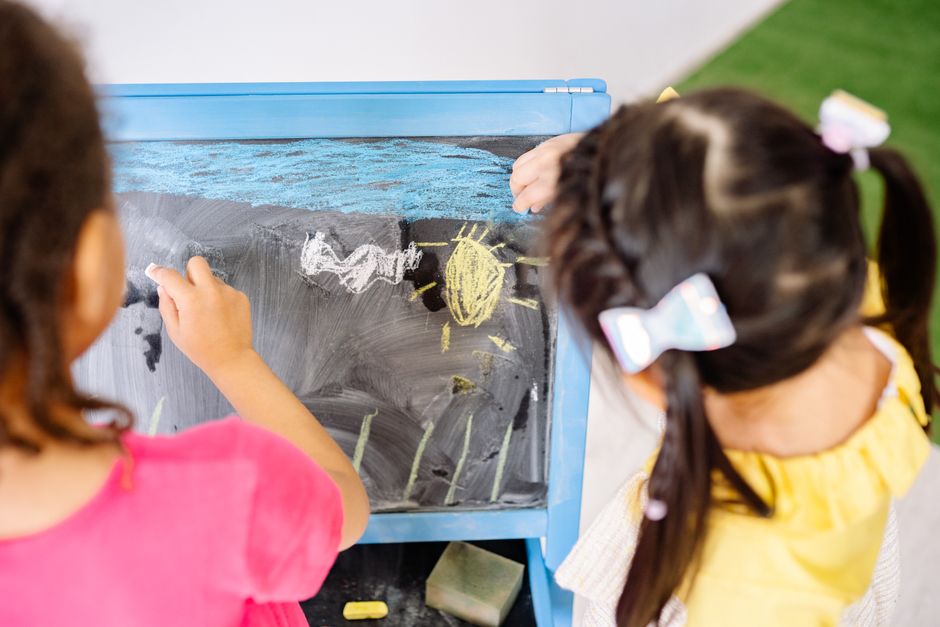
One activity is a fun moment. A series of activities builds a mindset. Here’s how to keep the curiosity going all week.
Ask open-ended questions during everyday routines: “Why does the ice melt faster on the metal tray than on the plastic plate?” “Which spoon is heavier—the wooden one or the metal one?” These small prompts turn ordinary moments into STEM lessons.
Keep a “Wonder Journal”—a simple notebook where your child draws or dictates questions they want to explore. This builds literacy and scientific thinking simultaneously. Use a washable marker like Crayola Ultra-Clean Washable Markers ($7.99) so the journal stays usable.
Incorporate building toys that reinforce engineering concepts. The LEGO DUPLO My First Number Train ($19.99) teaches counting and sequencing, while Play-Doh’s Shape and Learn set ($12.99) develops spatial reasoning. These aren’t required, but they extend the learning between structured activities.
Finally, model curiosity yourself. Say “I wonder how that works” out loud. Let your child see you try something and fail. When they see you experiment, they’ll feel safe experimenting too. That’s the real gift of STEM at this age—not facts, but a mindset.