
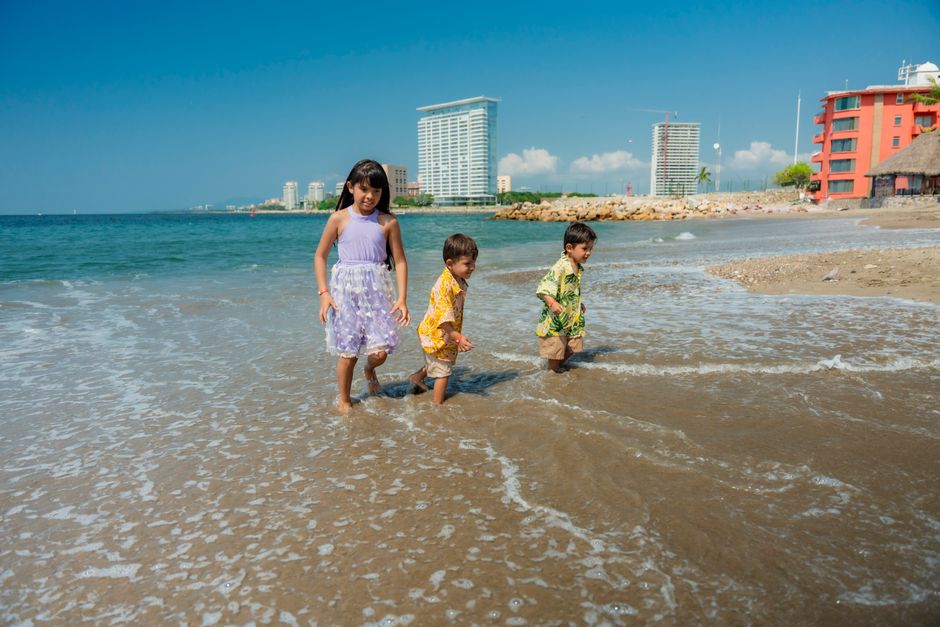
You’ve got two weeks of PTO saved up, three kids under ten, and a spouse who keeps saying “let’s just go somewhere warm.” Meanwhile, your bank account is looking at you like you just asked for a second mortgage. The last “relaxing” family trip ended with a toddler meltdown in an airport terminal and a hotel room that smelled like mildew.
I’ve been there. Twice. After planning and executing family vacations for the past eight years with kids ranging from toddler to teen, here’s what I’ve learned: the perfect trip isn’t about the destination. It’s about matching the type of vacation to your family’s actual energy, budget, and tolerance for chaos.
Why Most Family Vacation Ideas Fail (And How to Fix It)
The biggest mistake parents make is planning a trip that looks good on Instagram but works terribly in real life. You book a city tour with five museums in three days. Day one, your six-year-old is done after forty-five minutes in the first exhibit. By day two, everyone is fighting over snacks and screen time.
Here’s the fix: plan for boredom. Kids need unstructured time. They need to run, splash, dig, and do nothing. A family vacation that schedules every hour from 8 AM to 8 PM is a recipe for exhaustion, not memories.
Another failure mode: ignoring the travel gap. If you have a baby who naps at 1 PM and a ten-year-old who needs to burn off energy at the same time, you’re set up for conflict. Choose a destination where different ages can do different things within sight of each other. A beach with a shallow wading area and a deeper swimming zone works. A single hiking trail does not.
Finally, budget blowouts happen when you underestimate hidden costs. Parking fees, resort taxes, airport snacks, laundry, and “one more souvenir” add up fast. I’ve seen families blow $200 on airport food alone. Plan for 20% more than your estimated total, or choose a trip type where costs are predictable.
Three Vacation Types That Work for Most Families

Not all family vacations are created equal. Based on real-world testing with my own kids and feedback from dozens of other parents, these three formats consistently deliver the best ratio of fun to stress.
Option 1: The All-Inclusive Beach Resort
Best for: Families with kids aged 2–12 who want zero meal planning, zero driving, and zero arguments about what to eat.
You pay one price upfront. Kids eat free or at a steep discount. There’s a kids’ club for a few hours of adult time. The beach is right there. The biggest decision of the day is whether to swim before or after lunch.
Real example: The Beaches Turks & Caicos property includes a water park, Sesame Street characters, and a teen lounge. Rates start around $450 per night for a family of four in low season. That sounds expensive until you realize it covers all meals, drinks, activities, and tips. Compare that to a hotel where breakfast alone costs $60 for four people.
Tradeoff: You’re locked into one location. If the weather turns bad for three days, you’re stuck in a resort with 500 other families. Choose a resort with indoor play areas or a covered pool for backup.
Option 2: The National Park Road Trip
Best for: Families with kids aged 6+ who can handle longer car rides and want outdoor adventure without luxury prices.
The Junior Ranger program is a free, built-in activity at every U.S. national park. Kids complete a workbook, attend a ranger talk, and get a badge. It turns a hike into a mission. My kids still remember earning their badges at Grand Teton National Park more clearly than any museum we’ve visited.
Cost breakdown for a 7-day trip to Yellowstone and Grand Teton (family of four, summer 2026):
| Item | Cost |
|---|---|
| Park entrance fee (America the Beautiful pass) | $80 |
| Camping (6 nights at $35/night) | $210 |
| Gas (1,500 miles at 25 mpg, $3.50/gallon) | $210 |
| Groceries and camp stove fuel | $300 |
| Junior Ranger supplies (badge holders, pencils) | $20 |
| Total | $820 |
That’s less than two nights at many beach resorts. But you need to be comfortable with camping, cooking, and limited bathroom facilities. If your family isn’t into tents, rent a cabin through Recreation.gov — expect $100–$200 per night for basic lodging.
Option 3: The Multi-Generational Rental House
Best for: Extended families with grandparents, aunts, uncles, and cousins who want to share a space without sharing a hotel room.
Rent a house through VRBO or Airbnb with at least four bedrooms, a full kitchen, and a yard. Split the cost among three or four families. You get a private space for each family unit, a common area for meals and games, and a yard where kids can run while adults cook or relax.
My family did this on Lake Tahoe with three other families. The house cost $4,000 for a week in July. Split four ways, each family paid $1,000. That included a private dock, a hot tub, and a fully stocked kitchen. We cooked most meals, did one big grocery run ($600 split four ways), and spent the rest on a single dinner out and a boat rental.
Tradeoff: You’re responsible for cooking, cleaning, and entertainment. If you want to be served, this isn’t your trip. But if you value space, privacy, and the ability to put kids to bed in a separate room while adults stay up, it’s unbeatable.
How to Pick the Right Trip for Your Family’s Temperament
Every family has a vacation personality. Trying to force a high-energy, outdoorsy family into a beach resort will feel like a cage. Pushing a low-key, routine-loving family into a road trip with no reservations will cause meltdowns.
Here’s a quick self-assessment:
- High energy, loves adventure: National park road trip, whitewater rafting, bike touring. Budget at least $150/day for activities.
- Low energy, needs rest: Beach resort, lake cabin, all-inclusive. Budget $300–$500/day for convenience.
- Social, loves group dynamics: Multi-generational rental house, group cruise, family reunion. Budget varies wildly.
- Independent, hates crowds: Off-grid cabin, small-town rental, self-guided tour. Budget $100–$200/day.
If you’re not sure, start with a 3-day weekend test run. Pick a nearby destination that matches your top candidate type. Drive two hours. Stay somewhere simple. See how everyone feels after 72 hours. That trial run will tell you more than any article can.
Packing Strategies That Prevent Disaster
Overpacking is the #1 source of family trip stress. You haul a suitcase full of “just in case” items, then spend the whole trip digging through it for one missing sock.
Here’s the one-bag-per-person rule: each family member gets one carry-on-sized roller bag (22x14x9 inches) and one personal item (backpack or tote). That’s it. For a week-long trip. It forces you to pack only what you actually use.
Essentials for a family of four (7 days):
- 5 pairs of underwear and socks per person
- 3 bottoms (shorts, pants, or leggings)
- 4 tops (mix of short and long sleeve)
- 1 jacket or hoodie per person
- 2 pairs of shoes (one walking, one water-friendly)
- 1 swimsuit per person (wash it nightly in the sink)
- Basic toiletries in travel sizes
- One tablet or phone per kid for downtime
For the car or plane, pack a “go-bag” with snacks, water bottles, a change of clothes for each kid, wet wipes, and a portable charger. That bag stays at your feet, not in the overhead bin or trunk.
One more thing: label everything. Water bottles, jackets, tablets, and especially charging cables. Kids lose things. A permanent marker and a roll of masking tape cost $3 and save hours of searching.
Budget Breakdown: What Each Trip Type Really Costs
I’ve tracked expenses for 12 family trips over the past 5 years. Here’s what the numbers actually look like for a family of four, based on 2026 prices:
| Trip Type | Duration | Total Cost | Cost Per Person Per Day |
|---|---|---|---|
| Beach resort (all-inclusive, Mexico) | 7 nights | $4,200 | $150 |
| National park road trip (camping) | 7 nights | $820 | $29 |
| Multi-gen rental house (Lake Tahoe) | 7 nights | $1,000 per family | $36 |
| European city trip (budget hotels, self-guided) | 5 nights | $3,500 | $175 |
| Weekend cabin (2 hours away) | 2 nights | $500 | $63 |
Notice the cost per person per day column. That’s the real metric. A $4,200 trip sounds expensive, but at $150 per person per day for a family of four, it’s actually competitive with a mid-range hotel and restaurant meals. The camping trip is the clear winner for budget, but it demands more work.
When to Say No to a Family Vacation

This is the part no one wants to talk about. Sometimes the best family vacation is the one you don’t take.
If you’re carrying credit card debt at 20% interest, a $4,000 vacation is a bad financial decision. If your kids are under two years old, the logistics of flying, sleeping, and feeding can outweigh the benefits. If you and your partner are fighting more than you’re laughing, a stressful trip won’t fix it.
Alternatives that still feel special:
- Staycation with a theme. Rent a hotel room in your own city for one night. Order room service. Visit a local attraction you’ve never seen. Cost: $250–$400.
- Day trips. Drive to a state park, pack a picnic, hike for two hours, and come home. Cost: $20 in gas plus snacks.
- Backyard camping. Pitch a tent, build a fire pit (or use a portable one), roast marshmallows, and sleep outside. Cost: $0 if you already have gear.
These aren’t “real” vacations. But they create the same core element: undivided time together. And that’s what kids remember, not the hotel pool or the souvenir shop.
The best family vacation is the one where you come home more connected than when you left. That can happen anywhere — or nowhere at all.