

A heavy flea infestation can make a kitten dangerously anemic before many families realize how serious it is. Fleas do not just cause itching. They remove blood, spread through bedding and carpets, and can carry tapeworm larvae. I have learned to treat a kitten flea problem as a health check first and a cleaning job second. The safe order is simple: confirm fleas, check the kitten’s energy and gum color, remove visible fleas, then ask a veterinarian which medicine fits the kitten’s exact age and weight.
This guide focuses on identification, first aid, medication safety, and household control. It does not replace an examination, especially for a very young, weak, cold, pale, or poorly fed kitten.
What do fleas look like on a kitten?
Check the fur, skin, and bedding
Adult cat fleas are tiny, dark reddish-brown insects that move quickly and may jump when you part the fur. On a kitten, look first around the neck, behind the ears, under the front legs, along the belly, and near the base of the tail. The coat may show small black grains that look like ground pepper. Those grains can be flea dirt, which is digested blood.
To test it, place a few grains on a wet white paper towel. Flea dirt usually dissolves into rusty red marks because it contains blood. A flea comb makes the check easier than trying to catch a jumping flea with your fingers. Comb slowly over a white towel and inspect what falls out. The Companion Animal Parasite Council explains this flea-dirt test and recommends removing the material with a flea comb.
Watch for signs beyond scratching
Some kittens scratch, bite at their coat, twitch their skin, or become restless. Others show almost no itching even when fleas are present. More worrying signs include sleeping much more than usual, refusing food, weakness while standing, fast breathing, cold paws, or gums that look pale pink, gray, or white instead of healthy pink.
Flea-related anemia is the emergency problem. Kittens have small blood reserves, so a large number of fleas can cause trouble quickly. The Merck Veterinary Manual lists fleas as a common cause of iron-deficiency anemia in kittens. A kitten with pale gums, collapse, breathing difficulty, or marked weakness needs a veterinarian or emergency clinic now. Do not spend hours trying home treatments first.
Separate fleas from look-alike problems
Hair loss, crusts, red skin, and scratching can also come from mites, ringworm, allergies, or a skin infection. Flea dirt supports a flea diagnosis, but it does not explain every skin problem. If the kitten still scratches after the fleas are gone, or if circular bald patches appear, arrange a veterinary examination instead of repeatedly applying insecticide.
How can you confirm fleas without hurting the kitten?

Is a flea comb enough to confirm an infestation?
Yes, for a first check. Comb the kitten over a white towel in bright light, using short strokes from the head toward the tail. Pay special attention to the neck, groin, armpits, and tail base. Dip each captured flea into a cup of water with a little soap so it cannot jump back onto the kitten. Finding one adult flea or several reddish flea-dirt marks is enough to take the problem seriously, because most of the flea population is usually not sitting on the kitten.
What if the kitten has fleas but looks normal?
Start removing visible fleas and weigh the kitten, but do not guess a medication dose. A kitchen scale that reads in grams is much more useful than estimating size by eye. Record the kitten’s age, weight, appetite, energy, gum color, and the number of fleas found. This information helps a veterinarian choose treatment and spot a decline. The clearest verdict from my experience is this: a bright, eating kitten can usually begin with careful combing while you arrange advice, but a kitten that is cold, weak, pale, or not eating belongs in veterinary care immediately.
Do not assume a flea collar, dog spot-on, essential oil, garlic mixture, or leftover medicine is safe because the package mentions pets. The FDA says flea products must match the animal’s species, life stage, and minimum weight. Product names that sound similar can contain very different ingredients, so the package and active ingredient matter more than the front label.
What should you do during the first 24 hours?
1. Stabilize before bathing
- Move the kitten to a warm, quiet box away from other pets. A chilled kitten should not receive a full bath until a veterinarian gives advice.
- Check the gums, breathing, energy, and appetite. Pale gums, open-mouth breathing, collapse, or severe weakness mean urgent veterinary care.
- Weigh the kitten in grams and write down the result. Do not divide an adult cat dose or use a smaller portion by guesswork.
2. Remove fleas mechanically
- Use a fine flea comb, starting around the head and neck so fleas do not escape toward the face.
- Comb the entire coat in sections, rinsing the comb after every few strokes.
- Place removed fleas into soapy water. Plain water is not reliable because fleas can survive and climb out.
3. Bathe only when it is safe
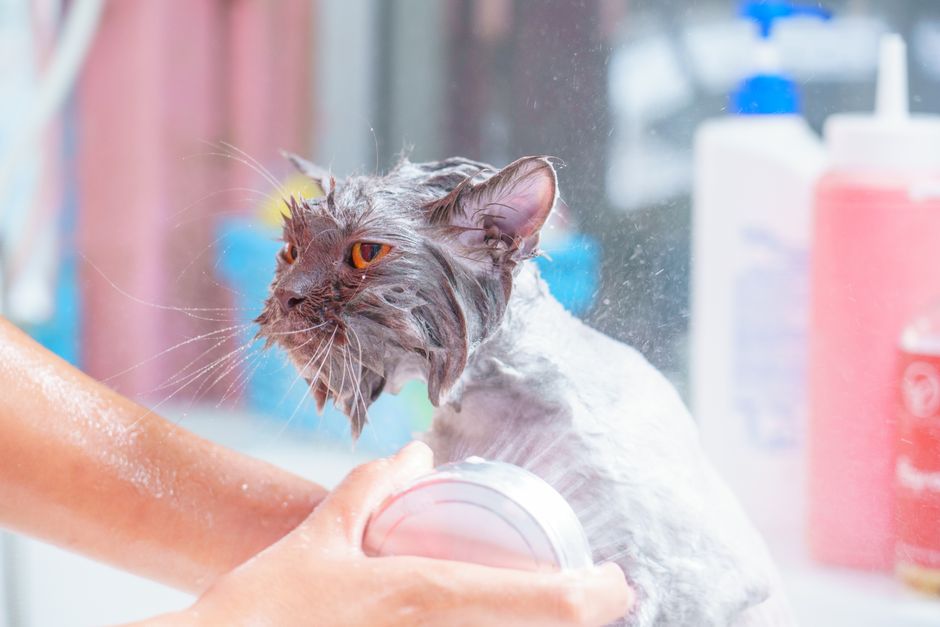
For a warm, stable kitten, a veterinarian may approve a short bath with a product labeled for kittens of that age. Use comfortably warm water, keep the face dry, rinse thoroughly, and dry the kitten completely with towels. Never leave a wet kitten to air-dry in a cool room. Avoid the eyes, nose, and mouth, and stop if the kitten becomes cold, limp, or distressed.
I prefer combing first because it removes adult fleas without exposing a tiny body to an insecticide. A bath can help in a heavy infestation, but it is not lasting prevention. It also does nothing to the eggs, larvae, and pupae around the home. The first-day goal is to lower the flea load safely, protect body temperature, and get an age-and-weight-appropriate plan.
Which flea medicines can be used for kittens?

Read the age and weight line before the brand name
There is no universal kitten flea medicine. The same active ingredient may appear in products for different species, strengths, and age groups. The examples below are real products with label thresholds that show why a kitten’s weight and age must come first. These are not blanket recommendations, and labels can change.
| Product | Label detail | What it does | My practical verdict |
|---|---|---|---|
| Capstar, nitenpyram | Cats and kittens 4 weeks or older and at least 2 lb | Oral adult-flea treatment; may be used as needed up to once daily under the label | Useful for an eligible kitten when a veterinarian or label confirms the dose, but it does not clean the home or provide lasting prevention. |
| Revolution, selamectin | Cats and kittens 8 weeks or older; feline dose is weight-based | Monthly topical control of adult fleas and flea eggs, with other parasite coverage | A strong veterinary-guided option for an eligible kitten when broader parasite coverage is useful. |
| Revolution Plus, selamectin and sarolaner | Cats and kittens 8 weeks or older and at least 2.8 lb | Monthly topical flea control plus additional parasite indications | Best reserved for a veterinarian who has checked the kitten’s weight, health, and parasite risks. |
| Bravecto topical for cats, fluralaner | Cats and kittens 12 weeks or older and at least 2.6 lb for flea treatment and prevention | Topical flea control for 12 weeks | A convenient option for an older eligible kitten, not a medicine for a very young kitten. |
The FDA labeling summary for Capstar gives the 4-week and 2-pound threshold. The FDA label for Revolution specifies use in cats from 8 weeks of age, while current FDA information for Revolution Plus specifies 8 weeks and 2.8 pounds. The 2026 Bravecto approval summary lists 12 weeks and 2.6 pounds for flea treatment and prevention.
Why I would not choose by speed alone
Fast flea killing sounds attractive, but the safest choice depends on the kitten’s hydration, nutrition, age, weight, medical history, and other medicines. A kitten may need treatment for worms or anemia as well as fleas. If the kitten is under the minimum age or weight, the correct answer is not to use half a tube. Use the comb, keep the kitten warm, and call a veterinarian.
Why does flea treatment fail after the kitten looks clean?
The home holds the larger problem
Adult fleas on the kitten are only one stage of the life cycle. Eggs fall into blankets, carpet, furniture, carriers, and cracks in floors. Larvae hide in protected debris, and pupae can wait before emerging when warmth, movement, or carbon dioxide signals an animal nearby. That is why a kitten may look clean on Tuesday and have new fleas on Friday.
My clear position is that treating the kitten without cleaning the home is a half-finished job. Vacuum carpets, rugs, sofa seams, baseboards, and the kitten’s sleeping area frequently. Empty the vacuum outside in a sealed bag or container. Wash bedding on the hottest cycle the fabric allows, then dry it fully. Repeat the work instead of expecting one cleaning session to end the infestation.
Every animal in the home matters
Check littermates, the mother cat, dogs, and other pets. Fleas move between hosts, so treating only the kitten can lead to reinfestation. Each animal needs a product labeled for its own species, age, and weight. Never place a dog-only flea treatment on a cat, and keep cats away from a recently treated dog until the label says contact is safe.
Permethrin is a serious hazard for cats. The ASPCA warns that dog flea products containing permethrin should never be used on cats. Tremors, drooling, trouble walking, agitation, vomiting, or seizures after flea-product exposure require immediate veterinary help. Do not wait for symptoms to disappear.
When does a kitten need a veterinarian for fleas?
Could the fleas have caused anemia?
Yes. Ask for prompt care if the kitten has pale gums, unusual sleepiness, weakness, poor appetite, fast breathing, weight loss, or feels cold. A veterinarian may check the blood count and hydration, look for worms, and decide if supportive treatment is needed. Heavy flea loads are more dangerous in small kittens than in healthy adult cats.
Can I use a flea medicine on a nursing mother?
Do not assume a product is safe during nursing just because it is safe for adult cats. Tell the veterinarian that the cat is nursing and provide the ages and weights of every kitten. The treatment plan may need to cover the mother, kittens, bedding, and environment at the same time.
What if I already used the wrong product?
Call a veterinarian, emergency clinic, or the number on the product package immediately. If a dog product containing permethrin was applied to a cat, treat it as a poisoning risk. Do not induce vomiting and do not apply another chemical to cancel it out. Have the package, active ingredient, amount used, time of exposure, and kitten’s weight ready for the clinician.
For a healthy kitten that is old and heavy enough for a labeled medicine, the safest long-term plan is one approved feline product used exactly as directed, plus household cleaning and follow-up. For a kitten too young or small for medication, careful combing and veterinary guidance are the winning combination. Flea care in 2026 is moving toward more precise, weight-based protection, but the basic rule remains steady: protect the kitten’s blood supply first, then break the flea life cycle everywhere the kitten lives.