Pet messes rarely stay on the carpet surface. Urine, vomit, and feces can soak into the backing and padding, then release odor again when humidity rises. This is household cleaning guidance, not legal advice—consult a licensed attorney for legal questions; no state law is discussed here.
Why pet stains and odors return after cleaning
The odor source matters more than the visible mark. A carpet can look clean while urine salts remain below the fibers. Water and ordinary soap may dilute the stain, but they often leave the odor-causing residue in place.
Urine travels below the carpet surface
Fresh urine spreads sideways through the carpet yarn and downward into the backing. On a thick carpet, it may reach the pad or floor beneath it. As the liquid dries, water leaves behind concentrated compounds. Those compounds attract moisture from the air, which explains why an old spot can smell again on a damp day. A black-light inspection can help locate older urine, but it cannot prove that every glowing mark is pet urine. Cleaning decisions should follow the smell, stain shape, and the pet’s usual accident area.
Odor removal requires contact, time, and extraction
A lasting treatment needs to reach the full contaminated area. The cleaner must stay wet long enough to work, then the loosened residue must leave the carpet. Blotting removes liquid from the top. Extraction removes more from below. If a stain has soaked through the pad, surface treatment alone will not deliver a lasting result. The clear verdict is simple: treat the largest likely affected area, not only the darkest visible dot.
What to do for fresh, dry, and unknown stains
Use the stain’s age and material to choose the first move. Rubbing spreads wet messes, and hot water can set some protein-based stains, so start with removal and blotting.
Match the first response to the mess
| Mess | First action | Safe working window |
|---|---|---|
| Fresh urine | Lift solids if present, then press with white towels | Start within 5 minutes |
| Dried urine | Re-wet the full area with an enzyme cleaner | Allow 10–15 minutes or the label time |
| Vomit | Scrape solids, blot moisture, then use mild cleaner | Remove solids before adding liquid |
| Feces | Pick up with gloves and disinfect the hard floor below | Clean before fibers dry stiff |
Test before treating the whole room
Choose a hidden carpet edge and apply a small amount of the planned cleaner. Wait until it dries. Check for color change, roughness, or a sticky feel. Do not mix bleach, ammonia, vinegar, hydrogen peroxide, or commercial carpet chemicals. Mixing cleaners can create irritating fumes or damage dyes. For an unknown stain, the best verdict is to start with the least aggressive labeled carpet-safe treatment and increase only when the fiber passes the test.
How to remove a pet stain step by step
Permanent results come from a repeatable process. The order below protects the carpet while giving the cleaner enough access to the source.
The six-step treatment sequence
- Put on disposable gloves and remove solid material with a scraper or paper towel.
- Press white towels onto wet urine or vomit. Replace towels until they lift very little moisture.
- Find the full perimeter. Include carpet that feels damp, smells strong, or glows during a black-light check.
- Apply a carpet-safe enzymatic cleaner until the affected fibers and backing are damp, not flooded.
- Keep the area wet for the product label’s contact time, often 10–15 minutes. Older urine may need a longer treatment.
- Extract with a portable carpet machine or wet vacuum, then rinse lightly with clean water and extract again.
Dry the carpet all the way through
Drying is part of cleaning, not a cosmetic extra. Lift furniture, open windows when outdoor air is dry, and run a fan across the carpet for several hours. Do not let children or pets walk on the area until it is dry and the product label permits access. If the odor returns after 24–48 hours, inspect the pad and floor rather than adding stronger chemicals. The likely problem is remaining contamination below the yarn.
Which enzymatic cleaner works best on carpet
For ordinary dog or cat urine on synthetic carpet, Nature’s Miracle Urine Destroyer Plus is the best first pick. It is designed around pet urine odor and gives clear label directions. Rocco & Roxie Supply Co. Stain & Odor Eliminator is the stronger alternative for old, repeated spots, while Simple Solution Extreme Pet Stain and Odor Remover suits households that want a broad pet-mess formula.
Choose by stain, not by fragrance
Enzyme products target organic residue; perfume only covers smell for a short time. Read the label for carpet compatibility, required dwell time, saturation guidance, and drying instructions. A product that smells pleasant in the bottle can leave a sticky film if you overapply it. For a small fresh spot, use enough to reach the stain depth. For a soaked pad, plan for repeated treatment or professional extraction. My clear ranking is Nature’s Miracle for routine urine, Rocco & Roxie for stubborn repeat accidents, and Simple Solution for mixed messes.
When a portable extractor earns its place
A cleaner such as the BISSELL Little Green Pet Deluxe 3857 helps after the enzymatic treatment has loosened residue. It does not replace the enzyme step. Use it to lift cleaner and dissolved material, then empty and rinse the dirty tank promptly. Never add an enzyme formula to a machine unless the machine and product labels approve it. For one isolated accident, towels may be enough; for several spots across a room, an extractor is the better choice because it removes more liquid with less hand pressure.
Which cleaning mistakes make pet odors worse
Most failed treatments are not caused by a weak brand. They come from using the wrong method or stopping too soon.
Five mistakes to avoid
- Scrubbing hard: friction pushes liquid sideways and damages carpet tips.
- Using hot steam first: heat and moisture can drive urine deeper and make drying slower.
- Using ammonia: its sharp smell may resemble urine to some pets and can encourage repeat marking.
- Spraying only the center: the contaminated area often extends beyond the visible ring.
- Judging success while wet: damp carpet has a different smell, so wait until it dries fully.
Know when not to add more cleaner
Do not keep layering products when the carpet feels crunchy, tacky, or discolored. Extra chemical residue can trap dirt and create a new smell. Stop and rinse-extract with clean water if the label allows. If the stain has reached unfinished wood, laminate seams, or a subfloor, household carpet products may not be suitable for that surface. The safest verdict is to protect the material first; a stronger smell is not proof of stronger cleaning.
When home cleaning is not enough
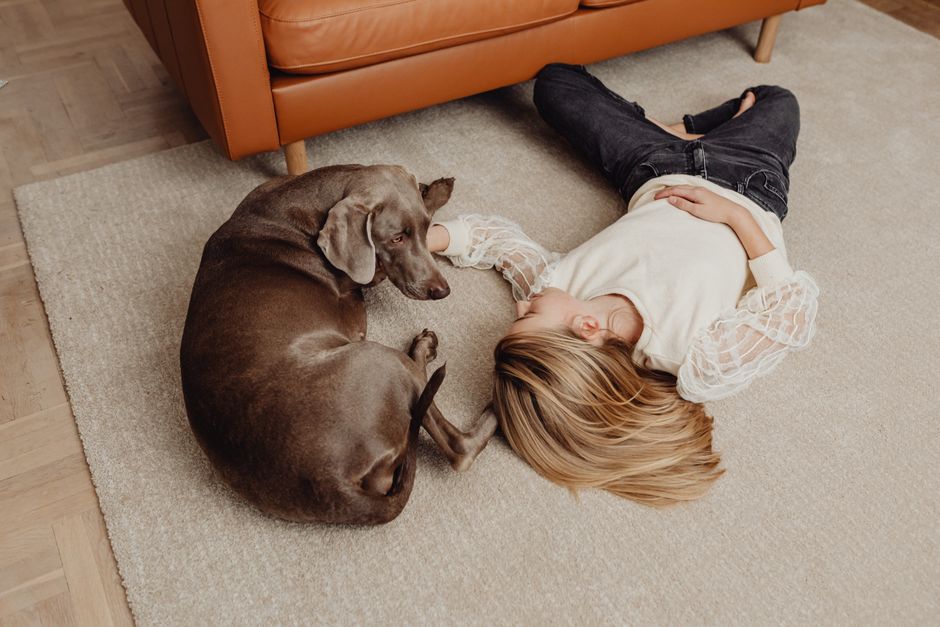
Home treatment works well for isolated accidents on washable synthetic carpet. It has a poor success rate when urine has soaked through the pad, when a pet has marked the same place repeatedly, or when the odor covers a large section of flooring.
Signs the pad or subfloor needs attention
Lift a carpet corner only if you can do so without damaging tack strips. A yellowed pad, swollen floor seam, or odor that becomes stronger underneath confirms that the source is below the face fibers. In that situation, a professional cleaner may need to treat both sides of the carpet, replace part of the pad, or seal a contaminated subfloor after proper cleaning. Do not seal odor into wood before removing the residue. That creates a harder and more expensive repair.
When a professional visit is the better choice
Call a professional when accidents cover more than a few square feet, when the carpet is wool or another delicate fiber, or when repeated home treatments have failed. Ask for the cleaning method, drying plan, and any extra charge for pad treatment before work begins. A professional should explain limits instead of promising a guaranteed permanent result. If the pet keeps returning to the same spot, also address the cause with a veterinarian or qualified behavior professional; cleaning alone cannot prevent a medical or behavior problem.
How to keep carpets odor-free after treatment
After the source is removed, prevention becomes a household routine. The best plan is fast cleanup, controlled access, and a check for repeat accidents.
Use a simple family cleaning system
Keep white towels, gloves, a scraper, and one carpet-safe enzyme cleaner in a labeled bin. Mark treated areas with a chair while they dry. Ask older children to report accidents instead of hiding them; hidden moisture causes more damage than the original mess. Wash pet bedding on the hottest setting the fabric label allows, and clean washable rugs separately. Vacuum high-traffic areas two or three times each week so hair and grit do not hold odor near the fibers.
Watch the pet as well as the carpet
New accidents after successful cleaning deserve attention. Frequent urination, straining, diarrhea, or sudden house-soiling can signal a health issue, so contact a veterinarian. Use gates to block a treated area until the scent is gone and the carpet is dry. The final recommendation is firm: for a single surface accident, blot, enzyme-treat, extract, and dry completely; for recurring odor, find the deeper source before buying another bottle.