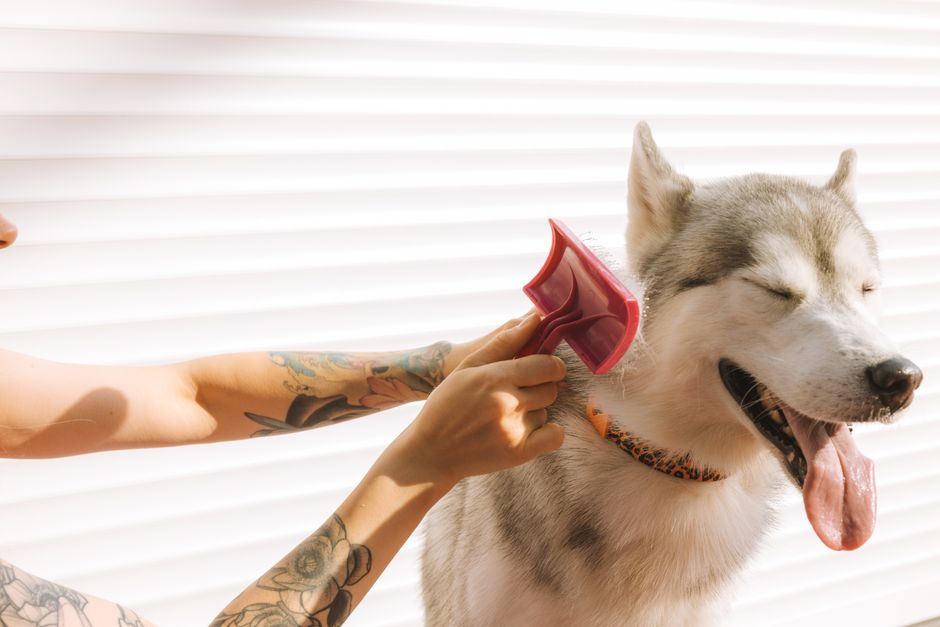
The common misconception is that the Dyson Pet Grooming Kit and the Furminator perform the same job. They do not. The Dyson attachment lifts loose hair from the coat and pulls much of it into a vacuum, while the Furminator uses a metal edge to remove loose undercoat before that hair reaches your sofa. For most long-haired dogs, the Furminator is the better shedding tool. The Dyson kit wins when loose hair around the home is your main problem.
Dyson Pet Grooming Kit vs. Furminator: What Each Tool Does
The quick answer for long-haired dogs
Choose the Furminator for coat maintenance and the Dyson kit for cleaner grooming sessions. Neither tool should replace a normal brush, comb, or professional help when a dog has tight mats.
| Tool | Typical 2026 price | Main action | Best use |
|---|---|---|---|
| Dyson Pet Grooming Kit | About $69.99 | Vacuum-assisted loose-hair removal | Collecting shed hair during brushing |
| Furminator deShedding Tool for Dogs, Long Hair, Large | About $29.99–$39.99 | Stainless-steel edge removes loose undercoat | Reducing seasonal shedding |
| Chris Christensen Big G Slicker Brush | About $59.99 | Separates and straightens long coat | Daily brushing and light tangles |
| Safari by Coastal De-Matting Undercoat Rake | About $14.99 | Breaks up loose undercoat and small knots | Targeted work on thick coats |
Why the tools are not direct substitutes
The Dyson kit is a vacuum attachment, not a de-shedding blade. Its advantage is containment: hair travels through the connected Dyson vacuum instead of floating across the room. The kit only works with compatible Dyson vacuum models, and suction strength can make nervous dogs uncomfortable.
The Furminator has no vacuum and leaves removed hair on the floor or brush. Its advantage is reach. The metal edge can pull loose hair from a dense double coat more effectively than a soft grooming attachment. Prices vary by size, so a small-dog model is not the right choice for a large Golden Retriever or Rough Collie.
Why Long-Haired Dogs Need Two Different Grooming Jobs

The first grooming job: open the coat
Long hair creates a simple problem: the surface can look neat while knots hide underneath. Dirt, moisture, skin oil, and friction turn loose strands into tangles around the ears, collar, armpits, tail, and rear legs. A dog with a double coat has another layer below the visible hair, and that undercoat can pack together during spring and autumn shedding.
The first job is to open the coat from the skin outward. A slicker brush separates individual strands. A greyhound-style comb then checks the work. If the comb stops at the skin, the coat still contains a knot. Skipping this step creates the biggest grooming mistake: running a de-shedding edge over tangled hair and pulling healthy coat along with the loose hair.
The second job: remove loose undercoat
After the coat feels open, a de-shedding tool can remove hair that has already detached from the skin but remains trapped in the coat. This reduces the amount of hair a dog drops during play, sleeping, and car rides. It does not stop shedding forever. Dogs still shed according to their coat cycle, daylight exposure, health, and season.
Why the sequence matters
Brush first, inspect second, de-shed last. Work in small sections and stop when the tool brings out mostly healthy, attached hair rather than a light layer of loose fluff. Overworking one patch can thin the coat, irritate the skin, and make the dog resist future sessions. The clear winner for coat health is a short, regular routine that removes loose hair without scraping the skin.
Which Tool Wins for Shedding, Mats, and Loose Hair?
Use this decision list
- For heavy seasonal shedding: the Furminator Long Hair model wins. Its steel edge reaches the loose undercoat, and the FURejector button helps release collected hair. Use it once or twice a week during a heavy shed, not every day.
- For hair on the floor and furniture: the Dyson Pet Grooming Kit wins. The vacuum captures much of the removed hair as you brush, which suits families with allergies, babies, or dark furniture. It cannot remove a tight mat and may not reach a very dense undercoat as well as a dedicated tool.
- For long coats with regular tangles: the Chris Christensen Big G Slicker Brush is the better first purchase. Its long pins separate thick hair before you use a comb or de-shedding tool. At roughly $59.99, it costs more than the Furminator, but it solves the problem that causes the most pulling.
- For small knots and packed areas: the Safari by Coastal De-Matting Undercoat Rake is the practical low-cost choice at about $14.99. It works best on small sections. Do not drag it through a large, tight mat.
My overall verdict is specific: buy the Furminator if shedding is the main complaint, and buy the Dyson kit if cleanup is the main complaint. For a badly tangled dog, buy neither as your first move; use a professional groomer or a proper dematting plan.
How to Groom a Long-Haired Dog Without Pulling the Coat
A safe 10-minute routine
- Choose a quiet room with good light. Put a non-slip mat under the dog and keep treats nearby.
- Start at the rear leg or shoulder, where many dogs tolerate brushing better. Separate a section about 2 inches wide.
- Brush in short strokes from the ends toward the skin. Hold the coat near the roots so the skin does not absorb every tug.
- Check behind the ears, under the collar, in the armpits, around the tail, and between the back legs. These areas mat first.
- Run a metal comb through each finished section. The comb should pass from skin to tip without catching.
- Use a de-shedding tool only on an open, dry coat. Make three or four light passes, then move to a new section.
- Finish with a calm inspection of the skin. Stop if you see redness, flakes, cuts, swelling, or signs of pain.
When to stop instead of forcing the session
Stop when the dog pants heavily, snaps, hides, or keeps turning toward the tool. Stop immediately if the coat contains a tight mat close to the skin. Cutting mats at home can also cut skin because the skin often folds inside the knot. A groomer can remove severe mats with the right clippers and judge whether the skin underneath needs veterinary care.
Short sessions work better than one long weekend battle. Five to ten minutes every few days teaches a dog that grooming has a clear ending. It also lets the owner find new knots before they become painful.
What Goes Wrong When Owners Choose the Wrong Tool?
Will a Furminator remove mats?
No. The Furminator can catch in a mat and pull hard against the skin. It may also break healthy topcoat hair around the knot. Remove small surface tangles with a slicker brush and comb first. A tight mat needs careful clipping or professional grooming.
Can the Dyson kit replace brushing?
No. The Dyson attachment collects loose hair, but it does not reliably open every layer of a long coat. It also depends on a compatible vacuum and a dog that accepts the sound and suction. Treat it as a cleanup-focused grooming attachment, not the only brush in the home.
Is either tool safe for every long-haired breed?
No. A thick double coat, a fine single coat, and a curly coat need different pressure and timing. Breeds with delicate skin, recent surgery, hot spots, or unexplained hair loss need extra caution. A de-shedding edge can remove too much coat from a fine-coated dog, while vacuum suction can alarm a nervous dog. The safest winner is the tool that removes loose hair with the fewest passes and no skin reaction.
The Best Choice for Your Dog’s Coat and Home
My clear recommendation
For most healthy, long-haired double-coated dogs, the Furminator is the better choice. It targets the loose undercoat directly, costs about half as much as the Dyson kit, and does not require a specific vacuum. Use a slicker brush and comb before it, keep sessions short, and limit use to shedding periods or one controlled session each week.
The Dyson Pet Grooming Kit earns the win for families that already own a compatible Dyson vacuum and mainly want to keep shed hair off furniture, rugs, and clothing. Its biggest benefit is mess control, not superior coat removal. The Chris Christensen Big G Slicker Brush is the strongest alternative for dogs whose main issue is tangling, while the Safari by Coastal rake suits small areas of packed undercoat on a budget.
When not to buy either tool
Skip both tools if your dog has severe mats, sore skin, bald patches, parasites, sudden shedding, or strong fear of grooming. Those problems need a groomer or veterinarian, not a more aggressive brush. Also skip the Dyson kit if you do not own a compatible vacuum, and skip the Furminator if your dog’s coat is fine, damaged, clipped short, or easy to over-strip.
Choose the Furminator for undercoat shedding, the Dyson kit for hair containment, and a slicker brush first when tangles are the real problem.