

A kitten can explore a gap of roughly two inches if its head fits through it. That makes ordinary furniture, loose cords, open windows, and untidy cupboards part of the safety plan before the kitten even arrives. The goal is not to turn your home into a sterile box. It is to remove the few hazards that can cause choking, falls, burns, poisoning, or a frantic midnight visit to the emergency vet.
The strongest setup gives the kitten one controlled base camp first, then expands access as you learn its habits. Walk through the home at kitten-eye level, check every room in a fixed order, and buy only the items that solve a real gap. This checklist covers the reasoning behind the job, a room-by-room sweep, practical products, failure points, and a final decision table.
Why Kitten-Proofing Starts With Routes, Not Rooms
Map movement before hiding hazards
Adults see a living room, kitchen, and hallway. A kitten sees launch points, tunnels, climbing routes, chewable edges, and spaces behind warm appliances. A sofa becomes a springboard to a shelf. A half-open drawer becomes a ladder. The narrow gap behind a washing machine becomes an exciting cave with hot surfaces, detergent, and electrical connections nearby.
Start at floor level and trace the kitten’s likely route. Look under beds, behind cabinets, along baseboards, beneath recliners, and around radiator pipes. Run your hand over the floor to find staples, broken plastic, pins, twist ties, and loose threads. Kittens investigate with their mouths, so small objects that seem harmless to an adult can become a choking or intestinal-blockage risk.
Sort danger into three classes
Most hazards fit into three groups: access, ingestion, and impact. Access hazards include open windows, balconies, washing machines, toilets, cupboards, and doors that can trap a paw. Ingestion hazards include medicine, cleaning fluid, toxic plants, rubber bands, string, yarn, foam, and food scraps. Impact hazards include unstable shelves, unsecured televisions, hot pans, dangling lamps, and furniture that can tip when a kitten climbs it.
This classification helps you act faster. If something can be reached, close or block it. If something can be swallowed, remove it or place it behind a latched door. If something can fall, anchor it or move it. Physical barriers beat supervision because even a careful family cannot watch a kitten every second.
Build a small base camp
Choose one quiet room for the first few days. It should have a solid door, washable flooring, no exposed wires, and enough space for a litter tray, water, food, a bed, and a hiding place. Keep food and water away from the litter tray, and leave a clear route between the hiding place and the essentials.
A base camp reduces risk while the kitten settles. It also gives children a simple rule: enter calmly, sit on the floor, and let the kitten approach. Expand access one room at a time after you have repeated the same safety sweep in that space.
Use This Room-by-Room Kitten Safety Sweep
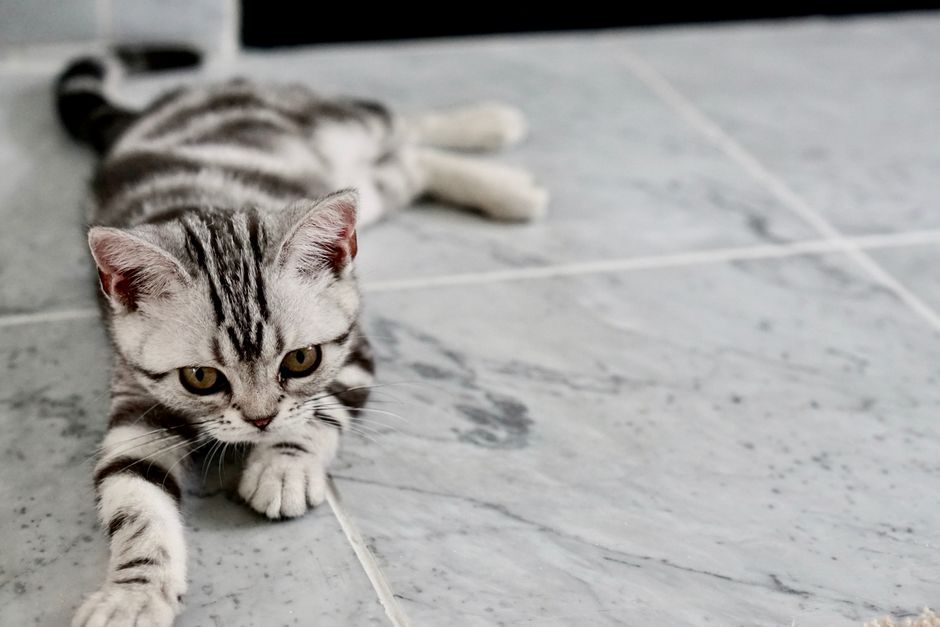
The ten-minute floor sweep
- Pick up every loose item smaller than a ping-pong ball, including coins, hair ties, toy parts, beads, pen caps, and bottle tops.
- Bundle or hide electrical cables. Pay special attention to phone chargers, lamp cords, television wires, and cords behind desks.
- Close toilet lids, washing-machine doors, tumble-dryer doors, cupboards, drawers, and reclining furniture.
- Move medication, vitamins, essential oils, cleaning products, pest treatments, and cosmetics into a closed cabinet.
- Remove lilies and other plants that may harm cats. Do not rely on a plant label alone; check the exact species.
- Test every window screen by pressing firmly on its corners. A screen that keeps insects out may not hold a climbing kitten.
- Look behind appliances and furniture for gaps larger than two inches. Block them with a secure panel, not a loose towel or cushion.
- Secure tall shelving, televisions, mirrors, and floor lamps to the wall or move them into the kitten’s restricted area.
- Cut dangling blind cords short or tie them high and out of reach. Keep curtain pulls away from the floor.
- Check heating surfaces, fireplaces, candles, irons, stovetops, and hot drinks before opening the room.
Set up the first-night room
Place the litter tray in a quiet corner with a low entry. Put the food and water several feet away. Add a box or covered bed, but leave two exits so the kitten never feels cornered. Remove rugs with loose fringe and any blanket with long loops. Wash the floor with a plain, pet-safe cleaner and let it dry fully before the kitten enters.
Give children one clear safety rule
Children should never carry a new kitten from room to room, pull its tail, chase it into a hiding place, or leave doors and windows open. Ask them to show an adult before offering a toy. Wand toys, ribbons, and string belong in a drawer after play because a kitten can swallow them when nobody watches.
Buy Barriers and Chew Control Before Decorative Cat Gear
My first purchase would be a properly fitted barrier, not a camera or a designer bed. A gate lets your family control access while the kitten learns the home. A cord-control system removes a real chewing hazard. A scratcher protects furniture by giving the kitten a legal target. These three jobs matter more during week one than a large collection of toys.
Best gate for a mixed family home
The Carlson Extra Wide Walk-Thru Pet Gate, model #0930 PW, fits openings from 29.5 to 36.5 inches and stands 30 inches high. Its small pet door measures 7.5 by 7.75 inches, while the bars leave gaps of about 2 to 2.5 inches. That small door can work for a kitten, but measure your other pets first. A determined puppy may fit through it, and the gate does not cover openings between 32 and 34 inches without the correct configuration. The manufacturer’s specifications should decide the fit. Verdict: choose this style for a doorway or hallway that needs controlled access; choose a full-height closed door for balconies, stairwells, or any space with a serious fall risk.
Best low-cost cord strategy
Safety 1st Plug Protectors come in a 36-pack, which suits a home with several exposed wall outlets. They help block unused outlets, but they do not make a power strip safe and they cannot replace unplugging a charger that the kitten can chew. The 36-pack product page confirms the intended multi-room coverage. For cords that must remain connected, 3M Command Clear Round Cord Clips offer four clips and five adhesive strips in the listed pack. They can route cords high along a wall, but keep the cord itself out of reach rather than trusting adhesive alone. Verdict: use outlet covers for empty sockets and physical routing for live cables.
Best furniture redirect
The PetFusion Ultimate Cat Scratcher Lounge costs $149.99 on the Petmate product page and measures 33.9 by 10.5 by 10.5 inches, with a listed weight of 12.7 pounds. It takes up more floor space than a basic scratch pad, but its curved shape gives a kitten a place to scratch, rest, and stretch. The manufacturer listing includes the size and weight. Verdict: buy it only if you have room and want a substantial furniture alternative. For a small apartment, a stable vertical post and a cardboard pad near the sofa offer better value.
What Should Stay Closed, Covered, or Completely Out?

Can a kitten stay in the kitchen?
Yes, but only after you remove access to knives, hot burners, open food, cleaning liquids, and food scraps. Keep onions, garlic, chocolate, alcohol, coffee, and dough out of reach. Close the dishwasher before letting the kitten explore, since plates can hold sharp scraps and detergent residue.
Do window screens make windows safe?
No. A standard insect screen can pop out when a kitten leans against it. Use a securely fitted pet-resistant screen or keep the window closed. Never allow access to an unsecured balcony. A fall from even a low level can cause injury, and the kitten may not understand the edge.
Which plants and flowers should leave first?
Remove lilies from rooms the kitten can enter. Also check bouquets, hanging plants, and fallen leaves rather than inspecting only the plant pot. Put unknown plants in a locked room until you confirm the species through a reliable veterinary or poison-control source. Do not assume a plant is safe because another pet ignored it.
What does supervision fail to catch?
Supervision often misses quiet chewing, trapped paws, and hazards that appear after a child moves furniture. A kitten may chew a charger while sitting beside you or climb behind a recliner before you notice. Use closed doors and barriers for the highest-risk areas, then supervise exploration as a second layer.
Use Measurements to Find the Real Weak Spots
The best kitten-proofing check uses a tape measure and a flashlight. Guessing creates false confidence. Record each opening, then decide if the barrier must stop a kitten, a larger pet, a child, or all three.
| Area | Measure or test | Safe target | Common failure |
|---|---|---|---|
| Doorway | Measure the narrowest opening in inches | Barrier fits the full range with no side gap | Buying a gate that misses the opening by 1-2 inches |
| Gate bars | Measure the clear gap between bars | No head-sized gap for the kitten | Assuming a dog gate automatically suits a kitten |
| Furniture gap | Check behind sofas and appliances | Block gaps wider than about 2 inches | Using soft items that the kitten can move |
| Window screen | Press each corner and inspect the frame | Screen stays locked under firm pressure | Trusting a loose insect screen |
| Shelf or TV | Push gently from the front and side | No rocking, sliding, or tip risk | Placing heavy objects high without anchoring |
| Cord route | Trace every cable from socket to device | No reachable loop or dangling section | Covering only the middle while leaving ends exposed |
Use storage carefully
An IKEA KALLAX 30 1/8 by 30 1/8 inch shelf unit lists a regular price of $44.99 on the US product page. It can store toys, shoes, and craft supplies when paired with closed bins, but its open cubes can also become climbing steps. IKEA’s product page lists the dimensions and current pricing details. Anchor the unit to the wall, keep tempting objects out of the lower cubes, and do not place it beside a window or tall launch point. Verdict: use it as secured storage, not as an accessible kitten playground.
Check the setup again after play
After the kitten has explored, inspect what changed. A pushed cushion can reopen a gap. A toy can pull a cable into reach. A moved litter mat can hide a small object. The second inspection often finds more than the first because you now know the kitten’s preferred routes.
Your Best Kitten-Proofing Plan Is Simple and Staged

Do the safety work before the welcome-home photo. Start with the base camp, remove toxic and chewable items, secure windows and furniture, then expand access in measured steps. You do not need every cat product on the market. You need barriers where access creates danger and safe alternatives where normal kitten behavior would otherwise damage the home.
| Situation | Best choice | Why |
|---|---|---|
| Kitten arrives today | Closed base-camp room plus floor sweep | Fastest way to control access and reduce hidden hazards |
| Home has a dog or young children | Fitted gate and supervised introductions | Creates separation without isolating the kitten all day |
| Many chargers and desk cables | Route cables high, cover empty outlets, unplug extras | Removes the chewing opportunity instead of relying on training |
| Kitten targets the sofa | Stable scratcher placed beside the target furniture | Redirects normal scratching where the kitten already wants to scratch |
| Open shelving or tall furniture | Anchor it, add closed storage, or restrict access | Reduces climbing, falling, and pulled-object risks |
For most families, the winning order is clear: secure hazards first, create one calm room second, and add furniture or toys only when they solve a specific behavior. A safer home gives the kitten freedom gradually, while giving everyone enough time to learn how the new family member moves.