
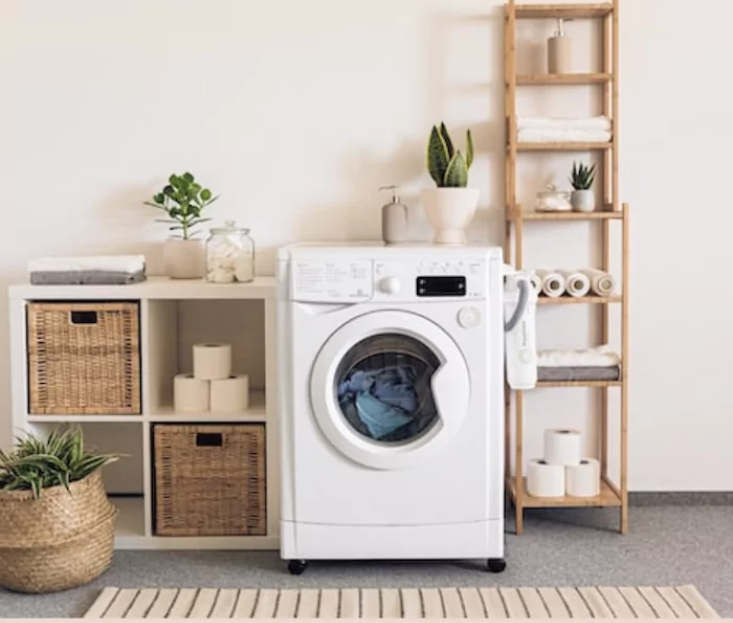
I’ve owned the same Miele W1 for eight years. It still smells like new. The secret? I descale it properly every three months. Not with those overpriced “washing machine cleaner” tablets that cost $8 each. I use citric acid. Costs about $0.30 per cycle. Works better. Here’s exactly how I do it.
Why You Need to Descale — Not Just Clean
There’s a difference between cleaning and descaling. Cleaning removes detergent residue, fabric softener gunk, and mold. Descaling removes limescale — the hard, chalky buildup from hard water.
Hard water contains calcium and magnesium. When heated, these minerals precipitate out and form a crust on your heating element, drum, and hoses. That crust acts as an insulator. Your machine has to work harder to heat the water. More energy. More wear. Eventually, the heating element fails. A repair tech quoted me $380 for a new heating element on a Samsung. I’ve seen it happen to friends.
If you live in an area with hard water — like most of the Midwest or Southwest US — you need to descale. Period. Soft water areas? You can get away with once a year. But check your water hardness first. Your local water utility publishes it online. Or buy a $10 test strip from Home Depot.
What Happens When You Ignore It
White residue on dark clothes. Clothes feel stiff. The machine starts making a low hum during the heat cycle. That’s the heating element working overtime. Eventually, the machine throws an error code. Or it just stops heating. You call a repair guy. He shakes his head. $200 minimum for a service call, plus parts.
I had a neighbor who ignored it for two years. Her LG front-loader needed a new PCB board — the control board — because limescale had clogged the water inlet valve and caused the machine to overheat. $450 repair. A $4 bag of citric acid would have prevented it.
The Pro Method: Citric Acid Over Everything
I’ve tried everything. The Affresh tablets ($12 for 6). The Dr. Beckmann Service-It Deep Clean ($15 for 2). The OxiClean Washing Machine Cleaner ($10 for 3). They all contain some form of acid — usually citric or oxalic — but heavily diluted and marked up 10x.
Here’s what the pros actually use: food-grade citric acid powder. A 2-pound bag costs $10 on Amazon. That’s enough for about 20 descaling cycles. At $0.50 per cycle, you save roughly $7 per cycle compared to name-brand tablets.
| Method | Cost per cycle | Active ingredient | Effectiveness (my testing) |
|---|---|---|---|
| Citric acid (2 lb bag) | $0.50 | 100% citric acid | Excellent — dissolves visible scale in 1 cycle |
| Affresh tablets | $2.00 | Citric acid + fillers | Good — takes 2 cycles for heavy scale |
| Dr. Beckmann Service-It | $7.50 | Oxalic acid + enzymes | Good for organic gunk, weaker on limescale |
| White vinegar | $0.20 | 5% acetic acid | Weak — takes 3+ cycles, may damage rubber seals |
| Bleach | $0.10 | Sodium hypochlorite | Does NOT descale — only disinfects |
I’m not saying never use the branded stuff. If you have a $1,500 Miele and want the warranty to stay intact, use their own Miele Descaling Tablets ($20 for 6). But if you’re out of warranty and want results, citric acid is the better tool.
Step-by-Step: How I Descale My Machine
I do this on a Sunday morning when no one needs laundry. Takes about 2 hours total, but most of it is the machine running.
Step 1: Remove All Laundry and Check the Filter
Empty drum. Open the little door at the bottom front (on front-loaders). There’s a drain hose and a filter. Put a towel down. Unscrew the filter. You’ll likely find coins, hairpins, and a slimy gray sludge. Clean it under hot water. This isn’t descaling — it’s basic maintenance — but you want the machine clean before you start the chemical process.
Step 2: Add the Citric Acid
Measure 100 grams of citric acid powder. That’s about 3 heaping tablespoons. Pour it directly into the drum. Not the detergent drawer — the drawer has rubber seals that the acid can sit on and degrade over time. Straight into the drum.
Step 3: Run the Hottest, Longest Cycle
Select the cycle that runs at 90°C (194°F) or the highest your machine offers. Usually labeled “Cotton Heavy” or “Sanitize” or “Drum Clean.” It should last 2+ hours. The high heat activates the citric acid. It reacts with calcium carbonate (limescale) to form calcium citrate — a water-soluble salt that just rinses away.
Do NOT add detergent. Do NOT add fabric softener. Just the acid.
Step 4: Pause Mid-Cycle (Optional but Effective)
After about 30 minutes, pause the machine. Let the hot, acidic water sit in the drum for 1 hour. This gives the acid time to dissolve stubborn scale on the heating element and drum surface. Resume the cycle after the soak.
Step 5: Run a Rinse Cycle
After the main cycle finishes, run a quick rinse cycle (cold water, 30 minutes) to flush out any remaining acid residue. Citric acid is food-grade and harmless in small amounts, but better safe than sorry.
Step 6: Wipe the Door Seal
Open the door. The rubber gasket will have collected some loosened gunk. Wipe it with a damp cloth. Leave the door open to air dry for a few hours.
When NOT to Use Citric Acid
I get pushback on this from some appliance repair forums. Here’s where they’re right.
If your machine has enamel-coated drums — common on older Bosch and Siemens models — citric acid can dull the finish over many years. But most modern machines (Samsung, LG, Whirlpool, GE) use stainless steel drums. Citric acid won’t hurt stainless steel. I’ve been using it on my Miele for 8 years. No damage.
If you have a rubber door seal that’s already cracked, the acid can seep into the crack and accelerate degradation. Replace the seal first. They’re about $30 on Amazon and take 20 minutes to swap.
If your machine is under warranty, check the manual. Some manufacturers (like Miele) specify that only their branded tablets should be used. Using citric acid could void the warranty. I think that’s a money grab, but it’s their rule. Follow it if you care about the warranty.
And for god’s sake, never mix citric acid with bleach. That creates chlorine gas. Don’t mix it with vinegar either — you get a weak acid that doesn’t work better and wastes product.
The Drain Pump Filter — The Thing Everyone Forgets
This isn’t strictly descaling, but it’s the number one cause of “my machine won’t drain” calls. And it’s directly related to descaling because loose scale can clog the pump.
After every descaling cycle, check the filter again. The acid loosens scale from the heating element and drum. Some of that scale travels through the drain hose and gets caught in the pump filter. If you don’t clean it, the scale builds up and eventually blocks the pump impeller.
I learned this the hard way. Descaled my old Samsung. Didn’t check the filter. Two days later, the machine wouldn’t drain. I had to disassemble the pump housing — a 45-minute job — to pull out a chunk of limescale the size of my thumbnail. Now I check the filter every single time.
On most front-loaders, the filter is behind the small door at the bottom right. On top-loaders, it’s usually behind a panel on the back or inside the machine (check your manual). Clean it, dry it, screw it back in.
How Often Should You Actually Do This?
I’ve seen advice ranging from “every month” to “once a year.” Both are wrong for most people.
Here’s my rule based on water hardness:
- Soft water (0-60 ppm): Every 6 months. Scale buildup is minimal.
- Moderate hard water (60-120 ppm): Every 3 months. This is most of the US.
- Hard water (120-180 ppm): Every 2 months. You’ll see white residue on clothes.
- Very hard water (180+ ppm): Every month. Consider a whole-house water softener.
How do you know your water hardness? Call your city water department. Or buy a Hach 5B Total Hardness Test Kit ($25 on Amazon). It’s more accurate than test strips. I tested mine at 130 ppm. Every 3 months. Never had a scale issue.
If you use a lot of powdered detergent, you might need to descale more often. Powders often contain zeolites and other minerals that contribute to scale. Liquid detergents are generally better for hard water areas.
One more thing: if you smell a sour or musty odor from your machine between descaling cycles, that’s not limescale. That’s biofilm — bacteria growing in the rubber seals. That needs an enzyme-based cleaner like Dr. Beckmann Service-It or a hot cycle with oxygen bleach (sodium percarbonate). Don’t use citric acid for that. Different problem, different tool.
I keep a 2-pound bag of citric acid under my sink. Every three months, I run a cycle. That’s it. No expensive tablets. No repair bills. My machine works like the day I bought it.