
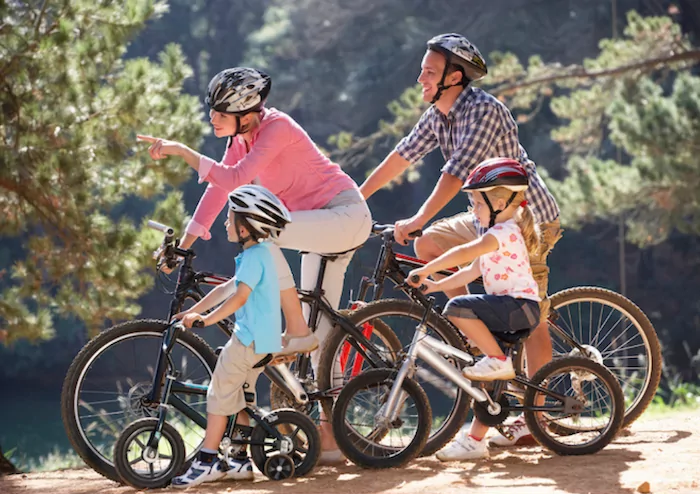
Saturday morning. You’ve got the bikes loaded. Everyone’s wearing helmets. Two blocks from home, your 7-year-old slams the brakes. “My legs hurt.” Your 10-year-old is already three pedal strokes ahead, oblivious. The dog in the trailer has started barking at a squirrel. You’re not even at the trailhead yet.
This scene plays out in thousands of driveways every weekend. The problem isn’t the bikes. It’s the activity. Most family rides fail because the activity doesn’t match the mix of ages, attention spans, and energy levels. You need something that works for a 6-year-old on a 16-inch bike, a 12-year-old who wants to go fast, and a parent pulling a dog trailer.
Here are seven cycling activities designed to keep everyone moving — without the mid-ride mutiny.
1. The Neighborhood Scavenger Hunt Ride
This is the single most effective activity for mixed-age groups. It turns a ride into a game. Kids stop focusing on how far they’ve gone and start looking for the next clue.
How it works: Before you leave, make a list of 8–12 things to find. Keep it simple. A red mailbox. A house with a stone fence. A dog wearing a bandana. A street sign that starts with “S.” A blue car in a driveway. A fire hydrant painted like an animal.
Print the list on a small card each kid can tape to their handlebars. Or use a free app like GooseChase (iOS/Android, free basic version) where you create a custom scavenger hunt with photo challenges. Kids snap a picture of each item as they find it.
Why it works for different ages
The 5-year-old looks for colors and shapes. The 10-year-old competes to find items first. The parent keeps the group moving along a pre-planned route that loops back home. You control the distance — keep it under 2 miles for beginners.
What you need
- A printed list or a phone with GooseChase installed
- A small handlebar bag or pouch for each kid to hold the list (the Roswheel Bike Handlebar Bag, $12 on Amazon, clips on in 5 seconds)
- A planned route that stays within quiet streets or a park path
Verdict: Best activity for ages 4–10. Keeps kids engaged for 45–60 minutes. Zero complaints about tired legs because they’re too busy hunting.
2. The Pump Track Session (Short, Intense, Addictive)
A pump track is a loop of rollers and berms you ride without pedaling. You generate speed by “pumping” — pushing down on the bike as you go downhill, then pulling up as you go uphill. It’s pure physics, and kids love it because it feels like a roller coaster they control.
Pump tracks are the best 30-minute cycling activity for families with kids ages 6–14. No one gets dropped. Everyone rides the same loop. The skill ceiling is high enough that experienced riders stay challenged, but beginners can roll through slowly.
Where to find one
Check your city’s parks and rec website. Most mid-sized cities now have at least one public pump track. The Valmont Bike Park in Boulder, Colorado has a beginner-friendly asphalt track. Ray’s MTB in Milwaukee has an indoor pump track ($17 admission, open year-round). Search “pump track near me” on Google Maps — 90% of them are free.
Gear notes
Any bike with knobby tires works. BMX bikes, mountain bikes, and even some hybrid kids’ bikes handle pump tracks fine. Lower your seat an inch or two so kids can move their weight around. Skip the dog trailer here — pump tracks are not pet-friendly.
Common mistake: Parents think they need a special pump track bike. You don’t. Your kid’s $200 Schwinn Koen or Raleigh Rowdy works perfectly. Just check tire pressure — 30–35 PSI gives better grip than rock-hard tires.
Verdict: 30 minutes of focused fun. Everyone improves. No one gets left behind. Best for burning off energy fast.
3. The Dog-Powered Cruiser Ride
If you’ve got a dog that loves to run, this activity turns your family ride into a shared adventure. The key is the right setup. Do not tie a leash to your handlebar. That’s how you end up in the ER after your dog bolts after a squirrel.
The safe setup
Use a dedicated bike-to-dog attachment system. The WalkyDog Plus Bike Leash ($45) attaches to your seatpost and keeps the dog at a safe distance. It has a spring that absorbs sudden pulls. The Bike Tow Leash ($60) uses a bungee system that lets the dog run alongside without yanking you off balance.
For smaller dogs or dogs over 10 years old, skip the running. Use a Burley Tail Wagon ($400–$500) or the Pet Ego Jet Set Plus ($220). These bike trailers have mesh windows, safety flags, and enough room for a 50-pound dog to sit up. Your dog gets the breeze and the view without the joint impact.
Route planning for dogs
Stick to paved multi-use paths or flat gravel trails. Avoid busy roads. Keep rides under 45 minutes for most dogs. Bring water and a collapsible bowl — the Ruffwear Quencher ($16) packs flat. Watch for hot pavement: if you can’t hold your palm on it for 5 seconds, it’s too hot for dog paws.
Verdict: Perfect for families with medium-to-large dogs that need exercise. The dog gets tired, the kids pedal, and everyone sleeps well that night.
4. The Destination Ride (Bribe Them With Food)
This is the oldest trick in the parenting playbook, and it works because it’s honest. You’re not pretending the ride is the fun part. The ride is how you get to the fun part.
Pick a destination that’s 2–4 miles from home. An ice cream shop. A donut place. A park with a good playground. A library with a story time. The destination must be something the kids actually want, not something you want them to want.
Route logistics
Map the route on Ride with GPS (free app) or Google Maps bike layer. Avoid hills on the way there — save energy for the ride home. Plan a mid-point rest stop even if it’s just a bench in a shady spot. Pack snacks for the break: granola bars, apple slices, water.
For the return trip, expect slower speeds and more whining. That’s normal. The sugar boost from the destination helps, but it fades after 15 minutes. Keep the return route slightly shorter if possible.
Real example
My family does the “Donut Loop” every Sunday. It’s 3.2 miles from our house to Top Pot Donuts. We take the alley path to avoid traffic. Each kid gets one donut and a small milk. The ride home takes 10 minutes longer than the ride there, but nobody complains because they’re eating donuts while pedaling. Yes, that’s a thing. Just don’t let them get chocolate on the handlebar grips.
Verdict: Best for building positive associations with cycling. Works for ages 3–15. The destination does the motivating for you.
5. The Cargo Bike Family Hauler
Sometimes the problem isn’t the activity — it’s the logistics. You’ve got a 3-year-old who can’t pedal, a 6-year-old who can pedal for 15 minutes then wants to stop, and a dog that needs to come along. A standard bike setup fails here. A cargo bike solves it.
Cargo bikes let the whole family travel together on one bike. The parent does the work. The kids ride in the front box or on the back deck. The dog sits at their feet. Everyone experiences the ride without anyone getting tired.
Two types of cargo bikes
Long-tail cargo bikes (like the RadWagon 4, $1,999, or the Surly Big Easy, $4,500) have an extended rear deck that fits two kids plus gear. The RadWagon 4 has a 350-pound total capacity and comes with running boards and handrails. Kids sit on the back, hold the rails, and pedal if they want — or just enjoy the ride.
Front-load cargo bikes (like the Urban Arrow Family, $4,500, or the Riese & Müller Load 60, $6,000) have a large box in front. Kids sit facing each other, strapped in with a 5-point harness. The box has a rain cover and a bench seat. The dog fits in the footwell. These are expensive but replace the need for a second car for many families.
When a cargo bike makes sense
You live within 3 miles of school, grocery stores, and parks. You have a place to store a 6-foot-long bike (garage, basement, or a Kryptonite KryptoLok chain lock, $45, for outdoor storage). Your youngest kid is under 6 and can’t ride independently yet.
When it doesn’t make sense: You live in a third-floor walkup. Your commute involves steep hills over a mile long. Your kids are both over 10 and can ride themselves. A cargo bike is a $2,000–$6,000 solution to a problem a Burley Bee trailer ($250) can solve for one-tenth the cost.
Verdict: Best for families with kids under 6 who want to ride together. Expensive but transformative for daily errands and short trips.
6. The Gravel Family Ramble (No Cars, No Pressure)
Paved bike paths are great until you hit a busy intersection. Gravel roads and rail-trails remove that stress. No cars. No traffic lights. Just dirt, trees, and the sound of tires on crushed stone.
Gravel riding is the most forgiving surface for family cycling. It’s softer than pavement, so falls hurt less. It’s smoother than singletrack, so beginners don’t get intimidated. And it’s almost always flat or gently rolling because most rail-trails follow old railroad grades.
Finding a good gravel route
Use the TrailLink app (free, from the Rails-to-Trails Conservancy) to find rail-trails near you. Filter by surface type (crushed stone or gravel) and length. Look for trails under 10 miles round trip with parking at both ends. The Paul Bunyan Trail in Minnesota has a 5-mile family-friendly section from Brainerd to Nisswa. The Silver Comet Trail in Georgia starts at the Alabama border and has flat, smooth gravel for 60+ miles — just pick a 4-mile out-and-back section.
Bike setup
Any bike with tires wider than 32mm works. Mountain bikes, hybrid bikes, and gravel bikes all handle crushed stone fine. Road bikes with 25mm tires will feel skittish and uncomfortable. If you’re buying a new bike for this, the Trek Dual Sport 2 ($650) or Specialized Sirrus X 3.0 ($1,000) have tires in the 35–42mm range that roll well on gravel and pavement.
Common mistake: Underestimating how much slower gravel is. A 5-mile gravel ride takes about the same time as a 7-mile pavement ride. Plan your route accordingly. Bring extra water — gravel rides feel easier but still work your legs.
Verdict: Best for families who want a peaceful, car-free ride. Works for all ages and fitness levels. The surface forgives mistakes.
7. The Bike Camping Overnighter (The Big Adventure)
This is the advanced activity. It’s not for the first ride of the season. But for families who’ve done the other six activities and want something bigger, bike camping delivers a sense of accomplishment that no day ride can match.
The goal is simple: Ride to a campsite, spend the night, ride back. Total distance should be under 15 miles each way for a first attempt. Keep the elevation gain under 500 feet.
What to pack (keep it minimal)
For a family of four, use a cargo bike or a trailer. The Burley Nomad cargo trailer ($350) hauls 100 pounds of gear. Pack one tent (a REI Co-op Half Dome SL 2+, $230, fits two adults and a small kid), sleeping bags, a stove, food, and water. Leave the toys at home. Kids will entertain themselves with sticks and rocks.
Route planning
Choose a campground within a state park or national forest that has hike-in or bike-in sites. ReserveAmerica.com lets you filter by “walk-in” or “bike-in” campsites. The Hither Hills State Park in New York has a dedicated bike-in campground 2 miles from the parking lot. Point Reyes National Seashore in California has hike-in sites at 4.5 miles with bike access.
Failure mode to avoid
Don’t try to cover too much distance. A 10-mile ride with loaded bikes feels like 20 miles unloaded. If someone is struggling, stop and redistribute gear. The strongest rider carries the heaviest bags. Kids carry only their sleeping bag and a water bottle. Never let a kid carry more than 10% of their body weight.
Verdict: Best for families with kids 8+ who have solid bike handling skills. Requires planning and gear but creates memories that last years.
Quick Comparison: Which Activity Fits Your Family?
| Activity | Best Age Range | Distance | Best For | Dog-Friendly? |
|---|---|---|---|---|
| Scavenger Hunt Ride | 4–10 | 1–3 miles | Short attention spans | Yes, on leash |
| Pump Track Session | 6–14 | 0.2–0.5 miles (loops) | High energy, short time | No |
| Dog-Powered Cruiser | All ages | 2–5 miles | Including a pet | Yes, this is the point |
| Destination Ride | 3–15 | 2–5 miles | Motivation by reward | Yes, on leash |
| Cargo Bike Hauler | 0–6 (passengers) | 1–5 miles | Daily errands, young kids | Yes, in the box |
| Gravel Family Ramble | 6+ | 4–10 miles | Car-free peace | Yes, trailer or leash |
| Bike Camping Overnighter | 8+ | 8–15 miles each way | Adventure, overnight trip | Yes, if campground allows |
Start with the scavenger hunt or the destination ride. Those two activities have the lowest barrier to entry and the highest success rate. Once your family has a few good rides under their belts, try the pump track or the gravel ramble. Save bike camping for when everyone can ride 5 miles without stopping. The dog will thank you for the trailer ride.