
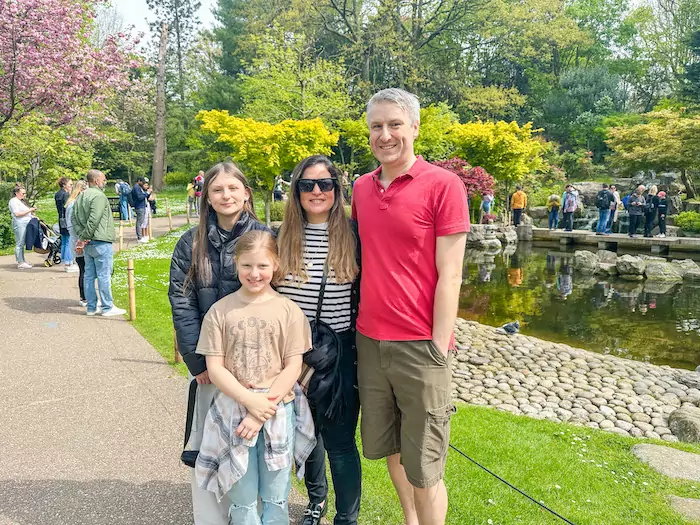
You’re standing in west London, but the air smells different. Moss. Wet stone. A koi carp glides under a wooden bridge. Your kid is whispering instead of shouting. Your dog is sitting quietly by your side, watching a waterfall.
That’s Kyoto Garden in Holland Park. Free to enter. Open every day. And if you plan it right, it feels less like a city park and more like a portal.
Here’s exactly how to make that happen — with kids, with a dog, or just with a packed lunch and a camera.
1. Go Before 10am or After 4pm — and Skip Weekends
Kyoto Garden is small. We’re talking a five-minute walk from one end to the other. When it’s crowded, the magic disappears. You’re just standing behind someone’s selfie stick.
Best time to visit Kyoto Garden is a Tuesday or Wednesday morning. The gates open at 7:30am. Arrive at 8am and you’ll have the place nearly to yourself. The light is soft, the birds are loud, and the koi come right up to the edge of the pond.
After 4pm on weekdays works too. Crowds thin out, and the late sun hits the waterfall at an angle that makes the water look gold.
Saturdays and Sundays are a different story. By 11am the paths fill up. You can still enjoy it, but you’ll be sharing the experience with fifty other people. If weekends are your only option, go at 8am sharp.
What about holidays and school breaks?
Same rule applies. Early morning is your friend. The garden opens at 7:30am year-round, so even in December you can grab that quiet window before the crowds arrive.
2. Bring These 5 Things (and Leave These 3 at Home)
I’ve visited Kyoto Garden maybe twenty times. I’ve seen people show up with nothing and leave after ten minutes. I’ve also seen families spread out a picnic blanket and stay for two hours. The difference is what’s in the bag.
Pack these:
- Snacks in a quiet wrapper. Crackers, apple slices, peeled oranges. No crinkly chip bags. The garden is peaceful. Every crunch echoes.
- A small blanket or picnic mat. There are a few benches, but most people sit on the grass near the pond. The ground stays damp in the morning. A waterproof blanket changes everything.
- Binoculars. Kids love them. There’s a heron that visits most mornings. Also: you can spot the koi from the far side of the pond without leaning over the railing.
- A refillable water bottle. There’s a drinking fountain near the main entrance to Holland Park, just outside the Kyoto Garden gate.
- A camera or phone with a zoom lens. The details matter here. The stone lanterns. The carved turtles. The way the maple leaves change colour in October. A wide shot doesn’t capture it.
Leave these at home:
- Balls, frisbees, or anything throwable. The garden is not a playing field. There are signs asking visitors not to run or play games. Respect that.
- Loud toys or speakers. No Bluetooth speakers. No toy horns. The whole point is the quiet.
- Strollers with hard plastic wheels. The paths are gravel and stone. Small-wheeled strollers rattle loudly. If you must bring one, use a sling or carrier for babies instead.
3. A Quick Comparison: Kyoto Garden vs. Other London Japanese Gardens
London has four proper Japanese gardens. I’ve been to all of them. Here’s how they stack up for a family day out:
| Garden | Location | Cost | Size | Dog-friendly? | Best for |
|---|---|---|---|---|---|
| Kyoto Garden | Holland Park | Free | Small (5 min walk) | Yes (on lead) | Quick escape, photos, quiet time |
| Inari Mews Garden | Holland Park (nearby) | Free | Tiny (3 min walk) | Yes (on lead) | Adding to a Kyoto Garden visit |
| Japanese Garden at Regent’s Park | Regent’s Park | Free | Medium | Yes (on lead) | Longer walks, less crowded |
| Kew Gardens Japanese Landscape | Kew | £21.50 (adult) | Large | No (except assistance dogs) | Full day out, serious garden lovers |
Verdict: Kyoto Garden wins for a free, quick, and beautiful visit. But if you have a whole day and no dog, Kew Gardens offers a much larger Japanese landscape with a pagoda and a bamboo grove.
4. How to Make It Feel Like a Real Trip to Japan (Even in London)
This is the part most visitors miss. They walk in, take a photo of the waterfall, and leave. But with a few small shifts, you can turn a 20-minute stop into a genuine cultural moment.
Learn the etiquette before you go
Japanese gardens are designed for quiet contemplation. The paths are meant to be walked slowly. The stones are placed so you look down, then up, then see something new. Move slowly. Stop often. Look at the moss.
Don’t feed the koi. The garden staff manage their diet. Bread and crisps harm them. Just watch them glide.
Read a haiku out loud
Before you go, pick one haiku by Matsuo Bashō or Yosa Buson. Read it to your kids while you’re standing by the pond. It takes thirty seconds. It changes the mood completely.
Here’s one that works well: “An old silent pond / A frog jumps into the pond — / Splash! Silence again.”
Bring a thermos of green tea
There’s no café inside Kyoto Garden. The nearest coffee is at the Holland Park café, about a five-minute walk away. Bring your own matcha or genmaicha in a thermos. Sit on the bench near the stone lantern. Pour slowly. Drink without talking for two minutes.
That’s the experience most people miss.
5. Visiting Kyoto Garden with a Dog — What Works and What Doesn’t
Dogs are allowed in Kyoto Garden, but only on a short lead. No extending leads. No off-leash time. The garden staff enforce this strictly.
My border collie mix has been three times. Here’s what I’ve learned:
- Go early. Dogs get nervous around crowds. At 8am, there’s space. By 11am on a Saturday, the paths are tight and your dog will be stepped on.
- Bring a portable water bowl. There’s no dedicated dog water station inside the garden. The nearest tap is at the Holland Park café.
- Watch the koi. Some dogs get obsessed with the fish. If your dog stares or whines, move to a bench further from the pond. It’s not fair to stress the koi.
- Pick up after your dog immediately. The garden is small and well-maintained. Bags are available at the main Holland Park entrance, but bring your own to be safe.
One honest note: If your dog is reactive, loud, or pulls on the lead, skip Kyoto Garden. Walk through Holland Park instead — it’s huge, open, and much more dog-friendly. The garden is for calm dogs only.
6. What to Do When Things Go Wrong (Common Mistakes to Avoid)
I’ve made most of these mistakes myself. Here’s how to avoid them.
Mistake 1: Going on a rainy day without a plan. The garden is beautiful in the rain. The stones get glossy. The water gets louder. But the paths get muddy, and there’s no shelter. Bring waterproof shoes and a jacket. Don’t bring a flimsy umbrella — it will catch on branches.
Mistake 2: Expecting cherry blossoms in spring. Kyoto Garden has some cherry trees, but it’s not a blossom destination. The main tree is a weeping cherry near the waterfall, and it blooms for about two weeks in late March. If you want cherry blossoms in London, go to Greenwich Park or Kew Gardens instead.
Mistake 3: Thinking it’s a full-day destination. It’s not. Spend 20-40 minutes here, then explore the rest of Holland Park. The park has a playground, a café, an open-air theatre, and a large lawn for running. Make Kyoto Garden the highlight, not the whole trip.
Mistake 4: Forgetting the garden closes at dusk. There’s no set closing time printed on the gate. The garden is part of Holland Park, which closes at dusk. In summer, that’s around 9pm. In winter, it’s 4pm. Check the sunset time before you go, or you’ll get locked in.
Mistake 5: Not visiting the Fukushima Memorial Garden next door. Right next to Kyoto Garden is a smaller, quieter Japanese garden called the Fukushima Memorial Garden. It’s even more peaceful. Most people walk right past it. Don’t. It takes three minutes to walk through and adds a whole other layer to the experience.
7. The Real Question: Is Kyoto Garden Worth the Trip?
Yes. But only if you go with the right expectations.
It’s not a theme park. It’s not a museum. It’s a small, carefully designed garden that rewards stillness. If you walk through quickly, you’ll see a pond and a waterfall and leave wondering what the fuss was about.
If you sit on the bench for ten minutes and watch the light move across the moss, you’ll understand why people call it a piece of Japan in London.
For families: bring snacks, go early, and let the kids look at the koi. For dog owners: keep the lead short and the visit short. For everyone else: bring tea, stay quiet, and let the garden do its work.
The best Japanese gardens aren’t the ones you photograph. They’re the ones that make you forget you’re in a city at all.