
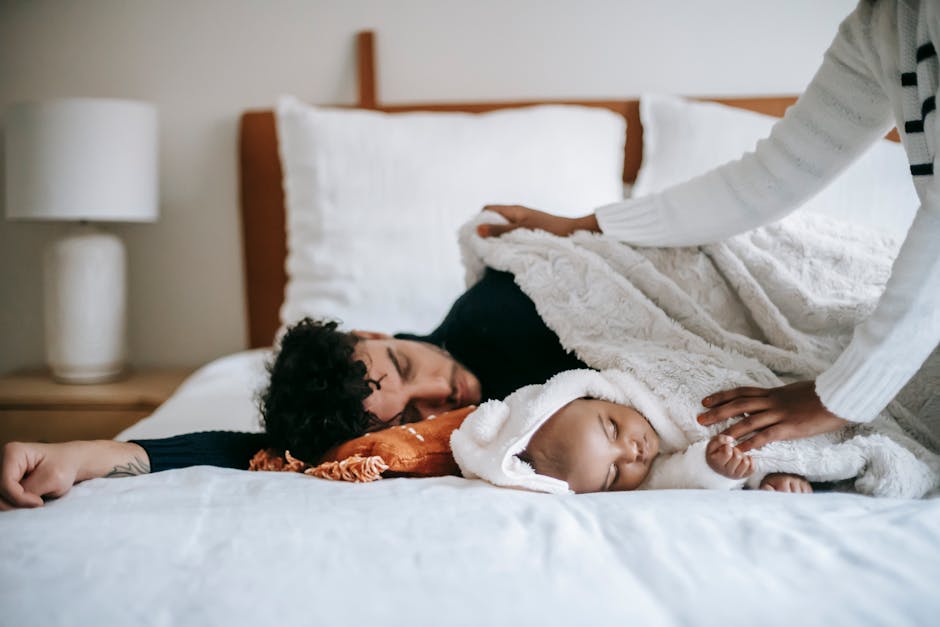
The transition from the womb to the crib is arguably the most significant physiological shift an infant experiences in their first year of life. For parents, this transition is often marked by profound sleep deprivation that impacts cognitive function, emotional stability, and even physical health. Choosing a baby sleep training program is not merely about “getting the baby to stop crying”; it is about establishing a neurological foundation for self-regulation. The goal is to help your child learn to navigate sleep cycles independently, moving from light sleep to deep sleep without requiring external intervention like rocking, feeding, or a pacifier. Most pediatricians suggest the “sweet spot” for beginning these programs is between four and six months, when a baby’s circadian rhythm has matured and they no longer require middle-of-the-night feedings for survival. If you are currently navigating the fog of exhaustion, having a structured, evidence-based plan is the fastest way to reclaim your household’s sanity.
The Biological Foundation: Why Timing Matters More Than Method
Before selecting a program, it is vital to understand the “why” behind infant sleep. Babies do not sleep like adults; their cycles are shorter, lasting roughly 45 to 50 minutes. When they surface from a cycle, they look for the same conditions that were present when they first fell asleep. If they were rocked to sleep and wake up in a still crib, they experience a “startle” response that leads to full wakefulness. This is why “drowsy but awake” is the cornerstone of almost every successful program. Furthermore, timing is dictated by “wake windows”—the amount of time a baby can stay awake before cortisol (the stress hormone) spikes. An overtired baby is chemically wired to resist sleep. Most successful programs for 2024 emphasize biological timing as much as behavioral training, ensuring the baby is physically primed to succeed before the training even begins.
Top Baby Sleep Training Programs for 2024: A Detailed Analysis

The landscape of sleep training has evolved from simple paperback books to high-tech digital ecosystems. Today’s parents often prefer interactive platforms that offer real-time adjustments. The Taking Cara Babies program continues to lead the market, specifically because of its high production value and empathetic delivery. Cara Dumaplin, a neonatal nurse and mother of four, uses a “modified graduated extinction” approach. This means you don’t just leave the room and never return; you use “pop-ins” to support the baby. However, for those who find video content too time-consuming, the Little Ones app offers a data-centric alternative. It uses proprietary algorithms to suggest nap times based on your baby’s specific wake-up time each morning, effectively “outsourcing” the mental load of calculating schedules.
For parents who are philosophically opposed to any form of “crying it out,” the Sleep Lady Shuffle (by Kim West) provides a gentler, albeit slower, alternative. This method involves sitting in a chair next to the crib and gradually moving that chair toward the door over a period of two weeks. While this reduces parental anxiety, it can sometimes be more frustrating for the infant, who can see their parent but doesn’t understand why they aren’t being picked up. Consistency remains the ultimate variable. Regardless of the method, research indicates that a 14-night commitment is the minimum requirement for behavioral change. Switching methods on night three because “it isn’t working” is the most common reason for failure, as it creates intermittent reinforcement of the very crying behavior parents are trying to extinguish.
Comparison of Leading Sleep Training Programs
| Program Name | Primary Method | Best For | Approximate Price |
|---|---|---|---|
| Taking Cara Babies | Modified Graduated Extinction | Visual learners / Video fans | $179 – $249 |
| Sleep Sense | Customizable (Chair to CIO) | Parents wanting options | $39 – $129 |
| Little Ones | Holistic / Schedule Based | Data-driven / App users | $60 – $150 |
| The Sleep Lady Shuffle | Gentle / Chair Method | Anxious parents / Co-sleepers | $20 – $150 |
| The Ferber Method | Graduated Extinction | Minimalist / Direct approach | Free – $20 (Book) |
Deep Dive: Taking Cara Babies “ABCs of Sleep”
Taking Cara Babies is more than a program; it is a comprehensive sleep philosophy. The “ABCs of Sleep” is their flagship course for babies 5 to 24 months. The methodology is broken down into a 14-night plan. The first few nights focus on the “bedtime routine” and the first “put down.” Cara emphasizes that the way a baby falls asleep at 7:00 PM dictates how they will handle a 2:00 AM wake-up. The program costs approximately $179 for the basic PDF and video access, or up to $249 for packages that include phone consultations.
Pros: The video demonstrations are incredibly helpful for seeing exactly how to perform a “pop-in” without over-stimulating the baby. It also includes a “weaning” guide for parents who want to drop night feedings safely. Cons: The price is significantly higher than traditional books. Additionally, the “pop-ins” can sometimes escalate a baby’s crying rather than soothe it, which Cara acknowledges and provides troubleshooting for. It requires a very high level of commitment to a strict daytime schedule, which may be difficult for working parents with varied childcare arrangements.
“Sleep is a biological need, but independent sleep is a learned skill. Like any skill, it requires practice, patience, and the space for the learner to struggle slightly before they succeed.”
The Tech-Forward Approach: Little Ones and Sleep Sense

If you prefer a more clinical or data-heavy approach, Little Ones is the gold standard. Their mobile app is designed to eliminate the guesswork. It provides “Opti-Nap” alerts and allows you to track everything from feeding ounces to diaper changes. The cost is roughly $60 for a single age-group program or $150 for a “complete” package that covers birth to age three. The pro of this system is its longevity; as your baby hits the 8-month, 12-month, and 18-month regressions, the app adjusts the schedule automatically. The con is that it can lead to “app fatigue,” where parents become overly obsessed with hitting every window to the minute, leading to increased anxiety if a nap is cut short by a doorbell or a loud dog.
Sleep Sense, created by Dana Obleman, is the “choose your own adventure” of sleep training. It is highly effective for parents who aren’t sure which methodology will suit their child’s temperament. If your baby is high-needs and sensitive, you might choose the “Chair Method.” If your baby is independent and easily over-stimulated, you might choose a direct extinction method. The program is priced between $39 for the basic e-book and $129 for the video suite. The primary pro is the flexibility; the primary con is that having too many choices can sometimes lead to “analysis paralysis” for exhausted parents who just want to be told exactly what to do.
Essential Nursery Gear: Investing in the Right Environment
Even the best baby sleep training program will fail if the nursery environment is working against the baby’s biology. To maximize your chances of success, you need to treat the nursery like a sensory deprivation chamber. Light is the enemy of sleep. Nicetown Blackout Curtains (available for $30-$60 depending on size) are a retail favorite because they use a triple-weave technology that blocks 99% of UV light and reduces external noise. For a truly professional setup, pairing these curtains with Blackout EZ Covers that suction directly to the glass ensures that no “light leaks” occur around the edges of the window frame.
Sound management is equally critical. A white noise machine should be consistent, non-looping, and deep-toned. The Hatch Rest+ 2nd Gen (~$89.99) is the industry leader for a reason. It offers a “Time-to-Rise” feature that becomes invaluable as your baby turns into a toddler, using colors to indicate when it is okay to get out of bed. It also features a backup battery, which is essential if your home experiences frequent power flickers. However, keep in mind that the Hatch requires a stable Wi-Fi connection for smartphone control. If your home’s wireless coverage is spotty, you might need to upgrade your home internet. Providers like Verizon Fios or AT&T Fiber often have promotions for new families, and a high-speed connection is vital not just for the sound machine, but for the high-definition video monitors that allow you to track sleep training progress.
Monitoring is the final piece of the puzzle. The Nanit Pro Smart Baby Monitor (~$299) is often cited as the best tool for sleep training. Unlike traditional monitors, the Nanit provides an overhead “bird’s eye” view, which is necessary for seeing if a baby is truly awake or just “active sleeping.”
- Nanit Pro Specs: 1080p HD video, two-way audio, background audio (so you can hear the baby while using other apps), and sleep tracking analytics.
- Pros: The “Heat Map” feature shows you where the baby moves in the crib, helping you identify if they are getting stuck in a corner. It also includes “Breathing Wear” which monitors the baby’s chest movements without sensors.
- Cons: High entry price and a recurring annual subscription fee for the “Insights” data after the first year.
Financial Planning for Baby Sleep Success

The costs of these programs and products can escalate quickly. Between a $200 sleep course, a $300 monitor, and $100 in blackout solutions, a family can easily spend $600 to $800 before night one even begins. To manage these retail costs, many parents utilize finance-focused strategies. Using a credit card with a high cash-back percentage (1.5% to 2% on all purchases) or an introductory 0% APR period can help spread the cost of these essential items over several months without accruing interest. Many major retail partners also offer “registry completion” discounts of 15%, which can be applied to high-ticket items like the Nanit or the Hatch Rest+. Always check for these financial incentives before clicking “buy,” as the savings can often cover the cost of the sleep training program itself.
Common Sleep Training Setbacks and Maintenance
Success is rarely a straight line. Most parents experience what is known as the “extinction burst” on night three or four. This is a behavioral phenomenon where the baby protests the new boundaries with more intensity than on night one. It is a “last-ditch effort” to return to the old way of sleeping. If you can stay consistent through this burst, you will usually see a permanent breakthrough on night five or six.
Furthermore, you must be prepared for “regressions.” These typically occur at 4 months, 8 months, 12 months, and 18 months, often coinciding with major developmental milestones like crawling, walking, or language acquisition. During a regression, the brain is so busy practicing new skills that sleep takes a backseat. The key to maintenance is to stick to your original sleep training rules. Do not introduce “new” sleep crutches (like bringing the baby into your bed) during a regression, as this will create a new habit that you will eventually have to break all over again.
Maintenance Checklist for Long-Term Success
- Adjust Wake Windows: As your baby grows, their need for daytime sleep decreases. Ensure you are stretching wake windows every few weeks.
- Check the Temperature: The ideal nursery temperature is between 68 and 72 degrees Fahrenheit. Use a TOG-rated sleep sack to ensure the baby doesn’t overheat.
- Travel Preparedness: Use a portable blackout solution like the SlumberPod (~$179) when traveling to keep the environment consistent.
- Health Check: If a baby is teething or has an ear infection, it is okay to pause training for 48-72 hours to provide comfort, then resume immediately once they are healthy.
Ultimately, the best baby sleep training program is the one that aligns with your parenting values and your child’s personality. Whether you choose the high-tech, data-driven path of the Nanit and Little Ones, or the more traditional, hands-on approach of the Sleep Lady Shuffle, the result is the same: a healthier, happier family. Sleep is not a luxury; it is a biological necessity for your baby’s brain development and your own mental health. Set the stage, choose your method, and commit to the process.