

Roborock Robot Vacuum 2026: Hands-Free Floor Maintenance for Busy Families
There is a persistent misconception that robot vacuums are merely expensive tech toys for people with too much disposable income and too little furniture. For years, skeptics have argued that these machines just bounce around randomly, scaring the cat while leaving half the dust behind. I used to be one of them. I figured my high-end upright vacuum and a bit of elbow grease were the only ways to truly keep a family home hygienic. But after a decade of testing home hardware, I’ve realized that the struggle isn’t about the power of your vacuum—it’s about the frequency of the clean. A manual deep clean once a week cannot compete with a systematic, daily removal of micro-dust.
If you have kids or pets, your floor is never actually clean. It is in a constant state of accumulating skin cells, pet dander, outdoor pollutants, and food crumbs. By the time you notice the floor is dirty, the air quality in your home has already suffered. The problem we face isn’t just visibility; it is the sheer volume of particulate matter that settles in our living spaces every hour.
The Hidden Science of Micro-Dust and Family Health
Most homeowners focus on the large debris—the cereal spilled in the kitchen or the mud tracked into the entryway. However, the real threat to a healthy home environment is the stuff you can’t see. High-traffic family homes are breeding grounds for allergens that settle deep into carpet fibers and the porous surfaces of hardwood floors. In my experience, even the most diligent parents can’t keep up with the rate of accumulation manually.
When we walk across a room, we kick up settled dust back into the breathing zone. This is why some families struggle with persistent sneezing or “morning stuffiness” even when the house looks tidy. Effective floor maintenance in 2026 requires a shift from reactive cleaning—cleaning because you see dirt—to proactive maintenance. You need a system that removes particles before they have a chance to embed themselves or become airborne. This is where high-pressure suction and consistent agitation come into play.
Understanding Suction Pressure (Pa) and Airflow
When you look at vacuum specs, you see the term “Pa” or Pascals. This is a unit of pressure. A standard low-end robot might offer 2,000 to 3,000 Pa. That is sufficient for hardwood crumbs but utterly useless for pulling dust out of a medium-pile rug. To truly sanitize a home, you need to look for machines that exceed 5,000 Pa. The difference in the amount of fine silt—the stuff that looks like grey flour—extracted from a “clean” carpet at higher pressures is staggering. I’ve seen carpets that were vacuumed daily with a cheap machine yield a full bin of dust the moment a high-suction unit took over.
The Role of Agitation in Floor Hygiene
Suction alone is only half the battle. You need physical agitation. Think of it like washing your hair; you don’t just pour shampoo on and rinse. You scrub. For floors, this means brushes that don’t just spin, but are designed to lift and separate fibers. Anti-tangle brushes have become a necessity, not a luxury, especially if you have family members with long hair or pets that shed seasonally. Without proper agitation, the suction is just pulling air through the top layer of the carpet.
Why Traditional Mopping is Often a Counterproductive Exercise
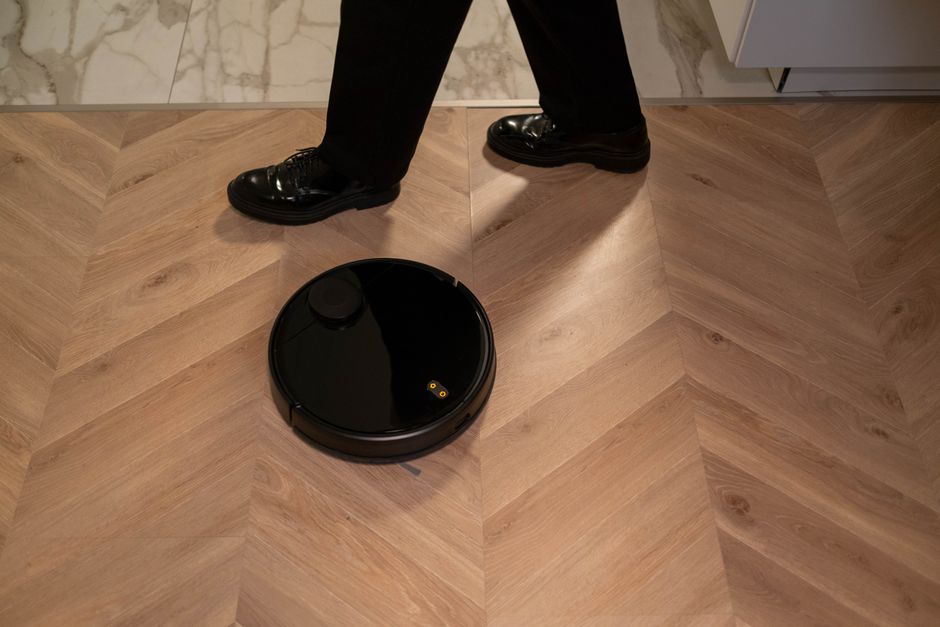
We need to talk about the bucket and the string mop. It is an antiquated system that, for the most part, simply redistributes diluted dirt. You dip the mop in water, wipe a section, and then dip the now-dirty mop back into the water you are using to “clean” the rest of the house. By the third room, you are essentially painting your floors with a thin layer of bacteria-laden grey water. Even the best microfiber mops lose their effectiveness once the fibers are saturated with grime.
True floor sanitation requires constant fresh water and a mechanism that removes the dirty water from the surface immediately. This is the fundamental flaw in manual mopping that modern technology has finally addressed. If you aren’t using a system that separates clean and dirty water, or at least one that scrubs with enough mechanical force to break down dried-on stains, you are likely just making the floor look shiny while leaving the biological load behind.
The Mechanics of Dual Spinning Mops
The latest advancement in floor care involves dual spinning mops. Unlike the older “vibrating pad” style of robot cleaning, dual mops rotate at high speeds while applying downward pressure. This mimics the action of hand-scrubbing. When these mops are combined with a system that can lift them when they hit a carpeted area, you finally get a machine that can handle a mixed-surface floor plan without making your rugs soggy. It’s a level of precision that manual cleaning simply cannot match consistently.
Integrating the Roborock QV 35A into Your Daily Routine
After years of navigating the quirks of various autonomous cleaners, I’ve found that the roborock Robot Aspirador QV 35A is where the technology finally hits the sweet spot between price and performance. At $441.85, it’s positioned as a mid-range investment, but its performance metrics rival machines that cost twice as much. The standout feature for me is the 8000Pa of suction. That isn’t just a marketing number; it’s the threshold where you start to see professional-grade dust extraction from carpets.
The QV 35A solves the “mopping dilemma” I mentioned earlier by using dual spinning mops that actually lift when they detect carpet. This solves the primary frustration of older robots—the dreaded wet rug. With its Reactive Obstacle Avoidance, it doesn’t just ram into the clutter that inevitably accumulates in a family home. It maps the room with LiDAR and adjusts its path in real-time. If you have been waiting for the technology to mature before jumping in, this is the generation that actually delivers on the promise of “set it and forget it.”
Check availability and current deals for the QV 35A: View on Amazon.
Technical Specifications of the QV 35A
- Suction Power: 8000Pa HyperForce suction.
- Mopping System: Dual spinning mops with automatic lifting (to prevent carpet wetting).
- Navigation: LiDAR-based mapping with Reactive Obstacle Avoidance.
- App Control: Custom no-go zones, multi-level mapping, and scheduled deep cleaning.
- Brush Design: All-rubber anti-tangle brush, essential for pet hair management.
One thing I’ve learned: the software is just as important as the hardware. Roborock’s mapping is consistently the most stable in the industry. It doesn’t “lose” the map because someone moved a chair. That reliability is what determines whether a robot is a helper or a chore in itself.
Comparing Automated Maintenance vs. Targeted Deep Cleaning

While the QV 35A is my primary recommendation for daily maintenance, there is still a place for manual intervention. Sometimes a kid knocks over a full glass of chocolate milk or a bowl of soggy cereal. A robot is not designed for “bulk liquid” recovery. In those instances, you need something that can handle heavy-duty wet/dry messes. This is where a secondary tool becomes invaluable for a complete home interior strategy.
The roborock F25 XT Aspiradora-Fregona Sin Cable is the manual counterpart to the robot system. It’s a cordless wet/dry vacuum with 20,000 Pa of suction, designed for those specific “disaster” moments. It features a self-cleaning and 90°C hot-air drying system for its rollers, ensuring the machine itself doesn’t start to smell like a damp basement after use. I view this as the “tactical” tool in your cleaning arsenal, while the robot is the “strategic” daily defense.
Compare prices for the F25 XT: Check price on Amazon.
Performance Comparison Table
| Feature | Roborock QV 35A (Robot) | Roborock F25 XT (Cordless) |
|---|---|---|
| Primary Use | Daily Autonomous Maintenance | Targeted Wet/Dry Spills |
| Suction Power | 8000 Pa | 20,000 Pa |
| Mopping Tech | Dual Spinning / Lifting | High-Speed Roller / 90°C Drying |
| Battery Life | Continuous (Auto-charge) | 60 Minutes |
| Best For | Dust, Pet Hair, Daily Shine | Sticky Messes, Mud, Spills |
Maintenance Routines That Actually Extend Hardware Life
I have seen people complain that their robots lose suction after six months. Almost every time, it’s because they treat the machine like an appliance that never needs care. If you want your investment to last until 2030, you need a 5-minute weekly routine. It is not difficult, but it is non-negotiable. First, check the sensors. A quick wipe with a dry microfiber cloth on the cliff sensors and the LiDAR eye prevents the machine from becoming “blind” and bumping into walls.
Second, the brushes. Even with “anti-tangle” designs, fine threads and carpet fibers can wrap around the axels of the side brushes. Removing these every week reduces the strain on the motors. Finally, the filter. If you have a washables HEPA filter, make sure it is 100% dry before putting it back. Putting a damp filter into a vacuum is the fastest way to grow mold inside your machine and ruin the motor with moisture.
Monthly Deep Care Checklist
- Remove the main roller and clean the bearings.
- Check the water tank for mineral buildup (use distilled water if you have hard water).
- Inspect the mop pads for wear; if the microfiber looks “flat,” they won’t scrub effectively.
- Update the firmware. Manufacturers often release navigation improvements that make the robot more efficient.
It’s also worth checking the reviews. The QV 35A currently holds a 4.4/5 rating across 1173 reviews. When you read through them, you’ll notice a theme: the people who are happiest are those who took the time to set up their “No-Go Zones” properly in the first week. Spend that time upfront; it pays dividends in the long run.
The True Cost of Time: Calculating the ROI of Smart Home Tech
Let’s get clinical about the math. If you spend 30 minutes a day vacuuming and mopping your main living area, that is 182 hours a year. That is four-and-a-half work weeks spent pushing plastic across a floor. When you invest $441.85 in a machine like the QV 35A, you aren’t just buying a vacuum; you are buying back a month of your life every single year. For a busy parent or a professional, the hourly “rate” of that investment is incredibly low.
But beyond the time, there is the mental load. There is a psychological weight to a dirty home. Walking into a kitchen with sticky floors at 7:00 AM starts the day with a micro-stressor. Having the floors cleaned automatically at 3:00 AM while the house is silent changes the energy of the home. It’s one less thing to manage, one less argument about whose turn it is to mop, and one more way to ensure your home remains a sanctuary rather than a source of chores.
See the latest deals for the Roborock QV 35A: Check current price.
The technology in 2026 has finally moved past the “gimmick” phase. We are now in the era of reliable, high-pressure, autonomous sanitation. Whether you choose a fully autonomous robot for daily upkeep or a powerful cordless wet/dry vac for the heavy lifting, the goal is the same: a cleaner, healthier home with significantly less human effort. After years of testing, I can confidently say that the shift to high-suction, dual-mop systems is the single most impactful change you can make for your home’s interior health.
Ultimately, the best cleaning system is the one that actually happens. We often have the best intentions for manual cleaning, but life, work, and family frequently get in the way. By automating the baseline cleanliness of your home, you ensure that even during your busiest weeks, your living environment remains healthy. The Roborock ecosystem provides that consistency, allowing you to focus on the things that actually matter within those four walls.