
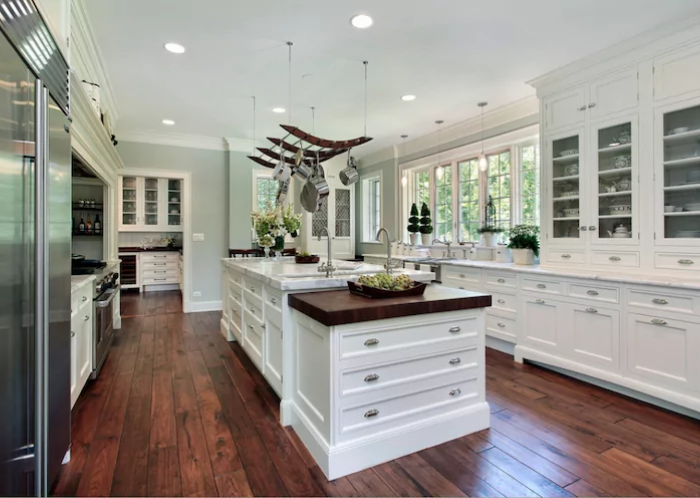
Most kitchens don’t need a full gut renovation. They need smarter use of what’s already there — and a few targeted changes that make the biggest difference for the least money. This guide walks you through five specific approaches to refresh your kitchen, keeping family chaos and pet fur firmly in mind. No demo sledgehammers required.
1. The 80/20 Declutter: Remove the Visual Noise First
Before you buy a single can of paint, clear your counters of everything that doesn’t get used daily. The biggest problem in most kitchens isn’t the cabinets or the backsplash — it’s the visual clutter. A toaster, a blender, a knife block, a fruit bowl, a coffee machine, three canisters, a plant, and a stack of mail. That’s nine things. It feels like 30.
What stays, what goes
Pull everything off the counters. Wipe them down. Now put back only the items you used in the last 48 hours. For most families, that’s the coffee maker, the kettle, and maybe the toaster. Everything else goes into a cabinet or drawer. The fruit bowl can live on a small side table or a shelf. The knife block? Magnetic strip on the wall — frees up counter space and keeps knives away from small hands.
Pet-proof the clutter zone
If you have a dog that counter-surfs, this step is non-negotiable. A clear counter means nothing to knock over, no food to steal, no vet bills from eating a dish sponge. For cat owners, move breakable items off open shelves. A tail swipe can send a ceramic jar flying. Store those items behind cabinet doors or on high, closed shelves.
One rule: if it hasn’t been touched in 30 days, it doesn’t belong on the counter. Not the stand mixer. Not the bread machine. Not the decorative olive oil bottle from 2017.
2. Swap Hardware and Lighting: The $50 Transformation
Cabinet knobs and pulls are the jewelry of a kitchen. Changing them costs less than $2 each and takes ten minutes with a screwdriver. Yet most people ignore them for a decade. New hardware changes how the whole room feels. Go for matte black, brushed brass, or simple stainless steel — whatever matches your existing faucet finish.
What to buy and what to skip
Standard cabinet knobs from brands like Knape & Vogt or Amerock cost $1.50 to $4 each at any hardware store. For a kitchen with 15 cabinet faces, that’s $30 to $60 total. Pulls for drawers run $3 to $8 each. Total project cost: under $100. Skip the cheap plastic ones — they break within a year. Go for solid zinc or brass.
Measure the existing screw spacing before you buy. Most cabinets use a 3-inch or 4-inch hole spacing for pulls. If you’re replacing knobs, the standard is a single screw hole. If your current holes don’t match the new hardware, you’ll need to fill and drill — that’s a bigger job. Stick with the same hole pattern whenever possible.
Lighting that changes everything
Overhead ceiling lights cast shadows on your work surfaces. A $20 under-cabinet LED strip from IKEA or Lithonia Lighting solves this instantly. Stick it under the upper cabinets, plug it in, and suddenly your countertops are bright, even, and welcoming. Battery-operated puck lights work too — OxyLED sells a pack of 6 for $18. They’re magnetic and stick to any metal surface. No wiring required.
One warning: warm white (2700K-3000K) makes food look appetizing and skin look healthy. Cool white (4000K+) looks like a dentist’s office. Don’t buy daylight bulbs for a kitchen unless you’re doing surgery.
3. Paint the Backsplash (Yes, You Can)
Tiling a backsplash is messy, expensive, and permanent. Painting it is neither. Specialized tile paint exists, it works, and it costs about $30. The result looks like new tile for a fraction of the price. This is the single highest-impact change you can make for under $50.
How to do it without ruining your kitchen
You need Rust-Oleum Tub & Tile Refinishing Kit ($30 at Home Depot) or INSL-X Tile & Grout Paint ($25). Both are epoxy-based and bond to ceramic, porcelain, and glass tile. Clean the tile thoroughly with TSP (trisodium phosphate, $8). Scuff it lightly with 220-grit sandpaper. Wipe off the dust. Tape off the countertops and cabinets. Apply the paint with a foam roller in thin, even coats. Two coats minimum. Let it cure for 48 hours before you use the sink or stove.
This paint is tough. It handles heat from the stove, splashes from the sink, and scrubbing with mild cleaner. It won’t chip if you apply it correctly. The mistake people make is skipping the sanding step. If you don’t scuff the tile, the paint peels off in sheets within weeks.
Color choice matters
White or off-white makes a small kitchen feel bigger. Navy or dark green adds depth behind open shelving. One rule: pick a color that’s already in your countertop or floor. You want the backsplash to blend, not scream. If your counters are speckled gray, go with a warm white. If they’re butcher block, try a sage green.
4. Create a Pet Station (Without Sacrificing Style)
If you share your kitchen with a dog or cat, their stuff lives there too. Food bowls, water bowls, treats, leashes, poop bags. It ends up on the floor underfoot or scattered across the counter. A dedicated pet station keeps everything in one spot and looks intentional rather than messy.
What a good pet station includes
Find a low cabinet or a corner of the kitchen that’s out of the main walkway. Inside that cabinet, install a pull-out drawer or a shallow shelf. Store food bags, treats, and bowls there. If you don’t have cabinet space, use a slim rolling cart — IKEA Råskog ($45, three shelves) fits in a gap next to the fridge. Top shelf: bowls. Middle shelf: food container. Bottom shelf: leashes and toys.
For water, consider a stainless steel, non-slip bowl that won’t slide across the floor. Neater Pet Brands makes a raised, spill-proof bowl system ($40) that catches drips and keeps the floor dry. If your cat likes to drink from the sink, a small pet water fountain ($25 from Catit) encourages drinking and reduces urinary issues — and it keeps them off your clean counter.
Keep food storage airtight
Dog and cat food goes stale fast in the original bag. Transfer it to a Vittles Vault airtight container ($35 for 40-pound capacity). It keeps kibble fresh, blocks odors, and prevents ants or mice from getting in. The container lives in the pantry or under the sink. Scoop what you need each morning. No more half-open bags on the counter.
What not to do: don’t put the pet station directly next to the human eating area. Dogs learn to beg when they see your table from their bowl. Place it at least six feet away from where you eat.
5. Add Open Shelving (Strategically, Not Everywhere)
Open shelving gets a bad reputation because people overload it with mismatched junk. Done right, it adds depth, character, and storage without feeling cluttered. The trick is to limit it to one wall or one section — not the whole kitchen.
Where to put it
Remove the upper cabinet doors above your sink or coffee station. That’s it. Just one or two cabinets. Take the doors off, fill the holes, paint the cabinet box the same color as the wall, and add simple wood shelves. Total cost: $0 if you reuse the existing cabinet box, or $30 for a floating shelf from IKEA Lack ($15 each, 43 inches long).
On the shelves, place items you use daily: coffee mugs, drinking glasses, a few plates, a small plant. Keep the color palette limited to three tones — white, wood, and one accent color. Everything visible should earn its spot. If you haven’t used that ceramic teapot since 2019, it doesn’t go on the shelf.
The dust and pet hair factor
Open shelves collect dust and pet hair faster than closed cabinets. If you have a shedding dog or cat, this is real. The fix: run a Swiffer duster over the shelves once a week. Wash the dishes on the shelves every two weeks. If that sounds like too much maintenance, keep the shelves limited to one small section. A single shelf above the sink is easy to maintain. A whole wall of open shelving is a dust farm.
One more thing: if you have a cat that jumps on counters, skip open shelving entirely. They’ll knock everything off for sport. Stick with closed cabinets and a magnetic child lock.
Quick comparison: Which refresh fits your kitchen best?
| Change | Cost | Time | Best for | Pet warning |
|---|---|---|---|---|
| 80/20 declutter | $0 | 1 hour | Every kitchen, immediate visual relief | Prevents counter-surfing injuries |
| Swap hardware + lighting | $50-$100 | 2 hours | Outdated cabinets, dark counters | Safe — no chemicals, no dust |
| Paint the backsplash | $30-$40 | 3 hours + 48h cure | Ugly tile you can’t afford to replace | Keep pets out during painting and curing |
| Pet station | $25-$80 | 1 hour | Homes with dogs or cats | Directly improves pet safety and cleanliness |
| Strategic open shelving | $0-$30 | 2 hours | Small kitchens needing visual depth | Not for homes with cats that jump |
Start with the declutter. It costs nothing and makes every other change look better. Then pick one project from the list — whichever bothers you most right now. That’s the one that will make you smile every time you walk into the kitchen.