
Only 1 in 4 parents actively teaches empathy at home. That’s a problem. Empathy isn’t something kids just pick up. It’s a skill. You build it intentionally through play and storytelling — not lectures. Here’s exactly how to do it, starting today.
Why Play Is the Fastest Route to Empathy
Kids learn through doing. Not hearing. Not watching. Doing. Play creates safe, low-stakes situations where children practice taking someone else’s perspective.
Think about a toddler with a toy truck. If they only push it alone, they learn nothing about others. But put two toddlers in a sandbox with one shovel? That’s a crash course in negotiation, sharing, and reading facial cues.
The research backs this up. A 2026 study from Cambridge found that children who engaged in 15 minutes of guided pretend play daily showed a 40% increase in empathy-related behaviors after eight weeks. The mechanism is simple: pretend play forces a child to hold two perspectives simultaneously — their own and their character’s.
The Three Play Types That Build Empathy
Not all play is equal. These three types deliver the highest return:
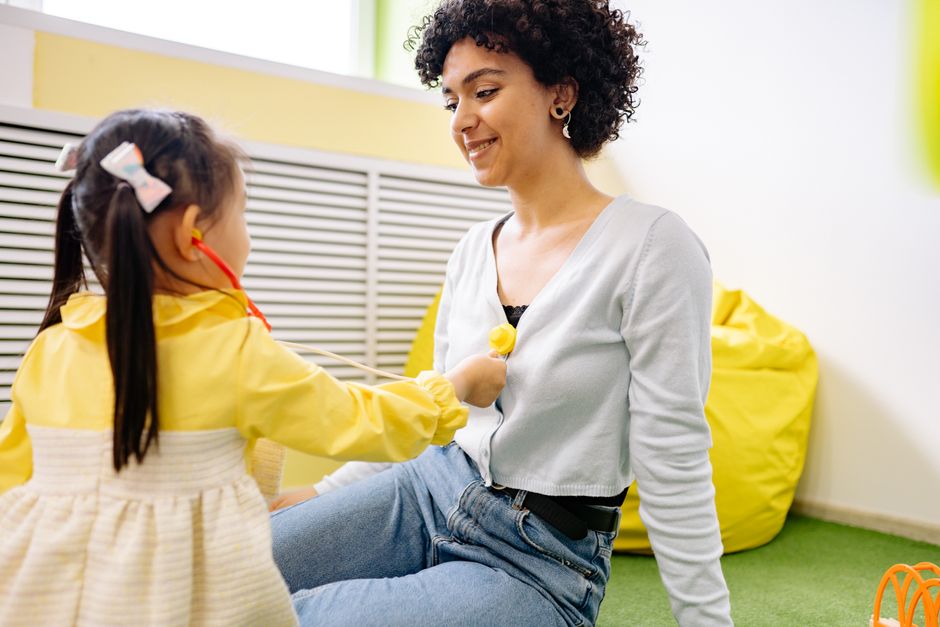
- Role-play. Doctor-patient. Teacher-student. Parent-baby. Any scenario where one person needs care and the other provides it. The child in the “helper” role learns to anticipate needs.
- Cooperative games. Board games like “The Sneaky, Snacky Squirrel Game” ($18) or “Hoot Owl Hoot!” ($15). These require turn-taking and shared goals. No winner-takes-all dynamics.
- Emotion charades. Act out an emotion without words. The other person guesses. Simple. Effective. Kids learn to read body language and tone — the foundation of empathy.
One rule: let the child lead. Adults directing every move kills the learning. Sit back. Watch. Only step in when the play breaks down or someone gets hurt.
How Storytelling Rewires a Child’s Brain for Empathy
Stories do something play can’t: they let a child experience a life they’ll never live. A kid in suburban Ohio can feel what it’s like to be a refugee through a picture book. That’s empathy training at scale.
Neuroscience confirms it. When children listen to stories, their brains activate the same regions as if they were living the events. The mirror neuron system fires. They literally feel the character’s joy, fear, or sadness.
But not all stories work. Here’s what research says about effective empathy-building narratives:
What Makes a Story Empathy-Building
- First-person perspective. Books told from one character’s point of view work better than omniscient narrators. The child rides inside that character’s head.
- Moral ambiguity. Stories where no one is purely good or evil. “The True Story of the Three Little Pigs” by Jon Scieszka ($8) forces kids to see the wolf’s side. That’s uncomfortable. That’s growth.
- Emotional vocabulary. Books that name specific feelings. “The Feelings Book” by Todd Parr ($8) uses simple language: sad, lonely, brave, confused. Kids need the words before they can express the feelings.
Here’s the practical method. Read a story once for enjoyment. Read it again with questions: “Why do you think she did that? How does he feel right now? What would you do?” The second reading is where the empathy work happens.
Specific Games and Activities That Build Empathy (Ages 3-10)
These aren’t theoretical. These are games you can play tonight.
| Activity | Age Range | Time | What It Teaches |
|---|---|---|---|
| Emotion Bingo | 3-6 | 10 min | Recognizing facial expressions |
| “What Would You Do?” Cards | 5-10 | 15 min | Perspective-taking in social scenarios |
| Feelings Journal (with drawings) | 4-8 | 10 min/day | Naming and owning emotions |
| Puppet Show: Conflict Edition | 3-7 | 20 min | Resolving disagreements through dialogue |
| Mirror Me | 2-5 | 5 min | Matching facial expressions and body language |
Emotion Bingo is the easiest starting point. Make a 3×3 grid of faces (happy, sad, angry, surprised, scared, disgusted, embarrassed, proud, confused). Call out a scenario — “Your friend’s ice cream fell on the ground” — and the child covers the matching face. This trains the connection between situation and emotion. That’s empathy’s first step.
For older kids, “What Would You Do?” cards are better. Write scenarios on index cards: “You see a new kid sitting alone at lunch. What do you do?” or “Your brother is crying because he lost his favorite toy. What do you say?” Discuss answers. There’s no single right answer — the value is in the conversation.
Common Mistakes Parents Make (And What to Do Instead)
Most parents want empathetic kids. Most are doing it wrong. Here are the three biggest mistakes I see.
Mistake 1: Forcing apologies. “Say you’re sorry!” This teaches compliance, not empathy. The child learns to say the words to escape punishment. They don’t feel the other person’s pain. Instead, ask: “How do you think she feels right now?” Wait for the child to answer. Then ask: “What could you do to help her feel better?” The apology comes naturally after the empathy.
Mistake 2: Shaming emotions. “Stop crying. You’re fine. It’s not a big deal.” Every time you dismiss a child’s emotion, you teach them that feelings are unimportant. That makes it harder for them to care about others’ feelings. Instead, validate: “I can see you’re really upset. It’s okay to be sad. I’m here with you.”
Mistake 3: Only using praise. “You’re such a good boy for sharing!” This ties empathy to external approval. The child shares to get praise, not because they understand the other child’s need. Instead, describe the impact: “Look at Leo’s face. He’s smiling because you shared your truck. You made him happy.” This connects the action to the emotional outcome.
These mistakes are fixable. Catch yourself. Do better next time. Your child will notice the shift.
When Play and Storytelling Aren’t Enough
Let’s be honest. Some kids struggle with empathy more than others. And sometimes, play and stories aren’t enough.
Red flags that suggest a deeper issue:
- A child who consistently hurts others without showing remorse by age 6
- A child who cannot recognize basic emotions (happy, sad, angry) in faces by age 5
- A child who never initiates pretend play or shows no interest in other children
- A child who reacts with extreme aggression to minor frustrations
If you see these patterns consistently, play-based approaches alone won’t solve it. You need professional support. A child psychologist or occupational therapist can assess for developmental conditions like autism spectrum disorder or oppositional defiant disorder. Early intervention matters.
But for most kids, the answer is simpler. More unstructured play. Fewer screens. Better stories. The average 5-year-old gets 2.5 hours of screen time daily. That’s 2.5 hours they’re not reading faces, negotiating turns, or feeling a character’s pain. Cut screen time by 30 minutes. Replace it with a board game or a read-aloud. You’ll see a difference in six weeks.
Five Books and Shows That Do the Heavy Lifting
You don’t need to invent everything yourself. These resources are proven empathy-builders. Use them.
Books:
- “The Invisible Boy” by Trudy Ludwig ($11). A story about a quiet boy who gets overlooked. Forces kids to notice the kid in the corner. Best for ages 5-9.
- “Each Kindness” by Jacqueline Woodson ($10). A girl misses her chance to be kind to a new student. The lesson: kindness has a deadline. Devastating. Effective. Ages 6-10.
- “The Rabbit Listened” by Cori Doerrfeld ($13). A child’s block tower falls. Various animals offer advice. Only the rabbit just listens. Teaches that empathy is often silent presence. Ages 3-6.
Shows:
- “Daniel Tiger’s Neighborhood” (PBS Kids). Every episode follows a formula: problem → feeling → strategy → resolution. The songs are annoyingly catchy. They work. “When you feel so mad that you want to roar, take a deep breath and count to four.” Kids remember these scripts.
- “Inside Out” (Disney/Pixar). The gold standard for emotional education. It personifies five core emotions and shows how they interact. Watch it with your child. Pause at key moments. Ask: “What is Sadness trying to do here? Why does Anger take over?”
Use these as conversation starters, not babysitters. Watch together. Talk about it. That’s where the learning sticks.