
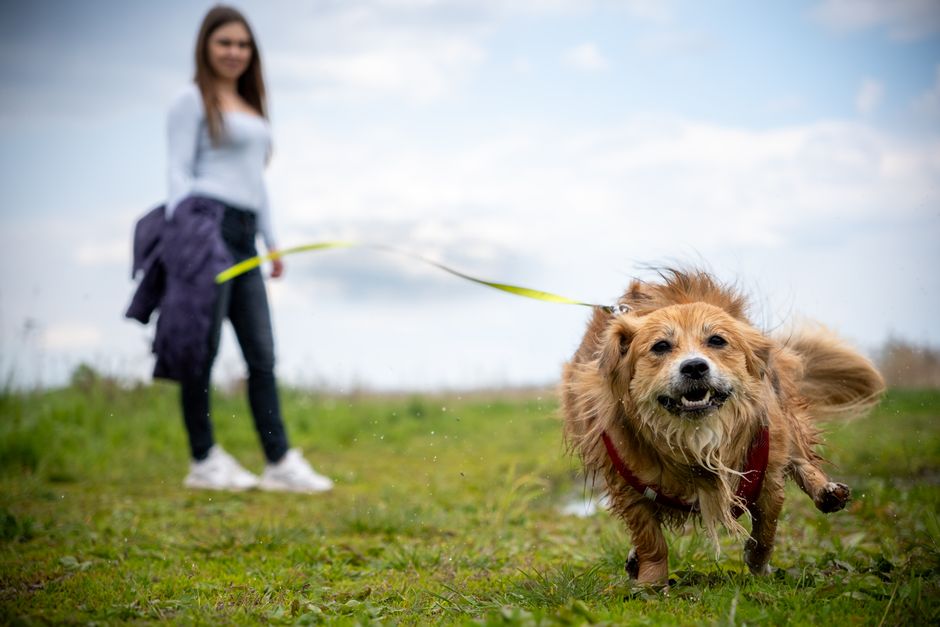
I remember the exact moment I knew something had to change. My 90-pound Rottweiler, Bruno, spotted a squirrel across the street. In one second, he went from calm walker to freight train. My shoulder popped, I stumbled into a bush, and the leash ripped out of my hand. He dragged me half a block before I could get my feet under me. That was the third time that week.
I tried everything. The “stop and wait” method. Turning around every time he pulled. A retractable leash that nearly took my fingers off. Nothing stuck. Bruno is strong, stubborn, and built like a small bear. Standard advice for a 30-pound terrier does not apply here.
After months of research and a lot of failed experiments, I found a system that actually works for large, powerful dogs. No shock collars. No prong collars. Just consistent mechanics, the right gear, and a plan that respects the dog’s strength while teaching them to walk politely. Here’s exactly what I did.
Why Most “No-Pull” Advice Fails for Big Dogs
Most dog training content is written for people with Labs and Goldens. The advice assumes your dog weighs under 60 pounds and responds to gentle pressure. That’s not reality for owners of Mastiffs, German Shepherds, or Rottweilers.
Here’s the core problem: large breeds have a different center of gravity and a much higher pain tolerance. When a small dog pulls, a front-clip harness turns them around easily. When a 100-pound dog pulls, that same harness just lets them lean into the pull. They barely notice.
I wasted two months on methods that simply don’t scale. The “be a tree” technique (stop moving when they pull) works great for a 40-pound dog. With Bruno, I’d stop, he’d keep pulling, and I’d slide across the pavement like I was waterskiing. Not effective.
The first thing I had to accept: I needed to change my approach entirely. Not just buy a different leash, but understand why large dogs pull and address the root cause. Most large breed pulling comes from one of three things: high prey drive, lack of impulse control, or simple physics (they’re stronger than you). My fix had to address all three.
The Three-Piece Gear Setup That Changed Everything
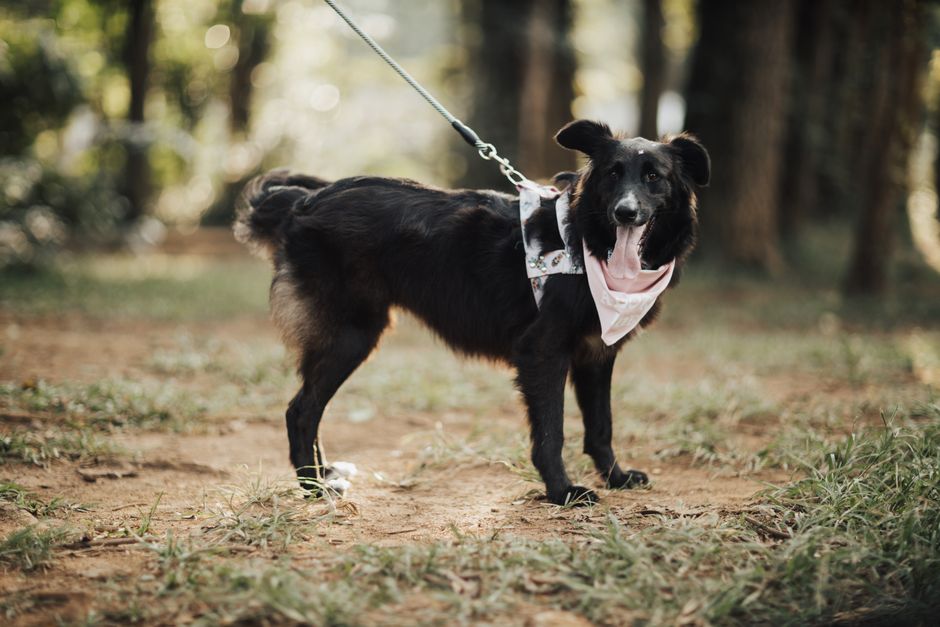
I don’t believe in buying your way out of training problems. But I also don’t believe in fighting biology with bad equipment. After testing seven different setups, I landed on a combination that gives me control without hurting Bruno.
Harness: PetSafe Easy Walk ($35)
This is a front-clip harness with a martingale loop across the chest. When the dog pulls, the harness gently turns their shoulders to the side. It doesn’t choke or pinch. It just redirects their momentum. The key is the front clip. Back-clip harnesses actually encourage pulling — they let the dog lean into the strap like a sled dog.
The Easy Walk fits deep-chested breeds well. Bruno wears a size Large with plenty of adjustment room. Make sure the chest strap sits high, right behind the armpits. Too low and it restricts movement. Too loose and they can back out of it.
Leash: Kong 6-Foot Nylon Leash ($18)
Retractable leashes are dangerous for large dogs. The thin cord can snap under sudden pressure, and the locking mechanism fails when you need it most. I use a simple 6-foot flat nylon leash with a padded handle. No bungee, no flex. Just a solid connection.
Six feet is the sweet spot. Long enough for the dog to explore, short enough that I can reel them in quickly. The padded handle saves my hands when Bruno does lunge. I’ve had cheap leashes burn my palms. This one has a rubber grip that actually works.
Head Halter: Gentle Leader ($30) — Use Sparingly
I don’t use this every walk. But for high-distraction areas (busy streets, dog parks), the Gentle Leader is a lifesaver. It fits around the muzzle and behind the ears, similar to a horse halter. When the dog pulls, their head turns toward you. They can’t get their full body weight into the pull.
Important: do not jerk or pop this halter. It’s a steering tool, not a correction tool. Bruno hated it for the first week. I desensitized him by putting it on for meals and short indoor sessions. Now he tolerates it, and I only use it when I need maximum control.
| Gear | Price | Best For | My Verdict |
|---|---|---|---|
| PetSafe Easy Walk Harness | $35 | Daily walks, mild pullers | Best all-around choice. Start here. |
| Kong 6ft Nylon Leash | $18 | Any large dog | Durable, comfortable grip. No frills. |
| Gentle Leader Head Halter | $30 | Strong pullers, high-distraction areas | Effective but requires acclimation. |
| Retractable Leash (any brand) | $15-40 | Nothing for large breeds | Do not buy. Dangerous and weak. |
The “Stop-Start-Reward” Drill That Rewired Bruno’s Brain
Gear alone won’t fix pulling. You need to teach the dog that pulling makes the walk stop, and walking politely makes the walk continue. This sounds simple, but large dogs test boundaries constantly. You have to be more stubborn than they are.
Here’s the exact drill I used. It takes 10 minutes per session, and I did it three times a day for two weeks.
- Start walking. Hold the leash in your left hand, treats in your right. Keep the leash loose — a J-shaped curve from your hand to the dog’s collar.
- The moment the leash goes tight, stop. Don’t say anything. Don’t yank. Just plant your feet and stand still. Bruno learned that tight leash = no forward movement.
- Wait for slack. The dog will eventually look back at you or take a step toward you. The instant the leash loosens, mark with “Yes!” and reward with a treat at your side.
- Resume walking. Take two or three steps, then repeat. At first, you’ll stop every few feet. That’s normal. Within a week, Bruno started checking in with me voluntarily before the leash even tightened.
The key is timing of the reward. I used tiny pieces of boiled chicken — high value, low calorie. The treat must appear at your hip, not in front of the dog. You’re rewarding the dog for being next to you, not for running ahead and coming back.
After two weeks, Bruno understood the game. He still lunges at squirrels sometimes, but he recovers faster. The drill builds an automatic check-in behavior that eventually becomes habit.
Two Mistakes That Made My Training Take Twice as Long
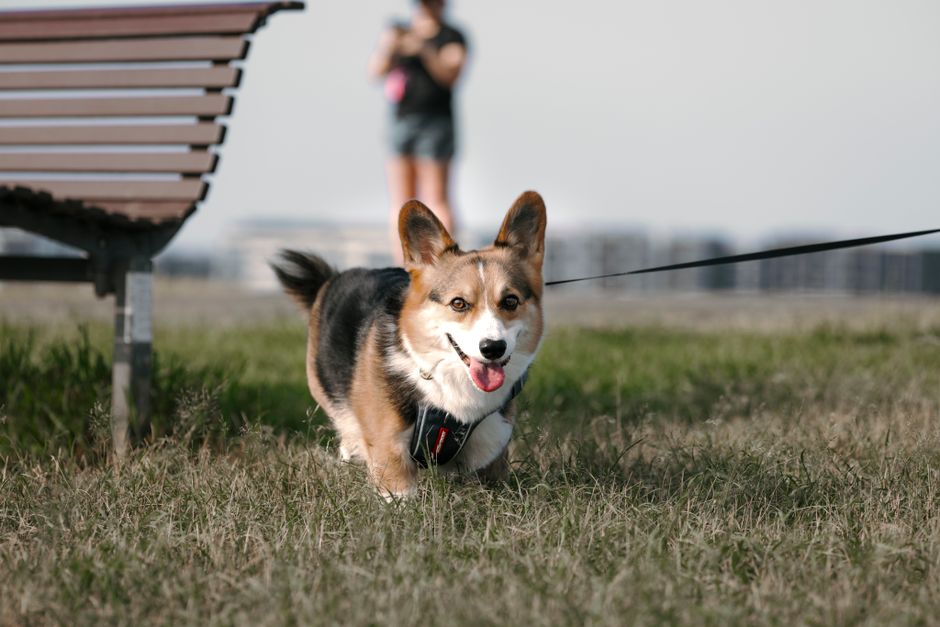
I made these errors. You don’t have to.
Mistake 1: Using a harness that lets the dog pull comfortably. Before the Easy Walk, I used a back-clip harness. Bruno loved it. He could lean into the pull and drag me effortlessly. Switching to a front-clip harness immediately cut his pulling force by 60%. The gear matters. Don’t train against bad equipment.
Mistake 2: Rewarding the wrong position. Early on, I’d give Bruno a treat when he stopped pulling, even if he was still standing three feet ahead of me. That taught him “stop pulling = treat,” but it didn’t teach him “walk next to me.” He’d pull, stop, get a treat, then pull again. I had to switch to rewarding only when he was at my side with a loose leash. The position of the treat delivery matters as much as the treat itself.
If you’re struggling with a dog that seems to “get it” during training but pulls like crazy on real walks, check your reward timing. Film yourself. You’re probably rewarding too late or in the wrong spot.
When No-Pull Gear Isn’t Enough — Impulse Control Exercises
Some large dogs don’t just pull. They explode. Bruno was like this. He’d see a dog across the street and go from zero to full sprint in half a second. No amount of harness magic can stop a 90-pound dog with four legs of momentum. You need to address the impulse control separately.
I added two exercises to our daily routine. Both take 5 minutes and don’t require a walk.
Exercise 1: The “Look at Me” Game. Stand in your living room with your dog on leash. Hold a treat at your eye level. Say “Look.” The second your dog makes eye contact, mark and reward. Do this 20 times. Then add distractions — toss a toy on the floor, have someone walk by. If the dog can hold eye contact with a squirrel running past the window, you’ve built real impulse control.
Exercise 2: The Doorway Wait. This is the single most useful drill for large breeds. Have your dog sit at the front door. Open it an inch. If they move, close it. Repeat until they stay seated with the door wide open. Then release with a word like “Free.” This teaches the dog that restraint leads to freedom. Bruno now waits at every door, gate, and car door without being asked. It translated directly to leash walking — he learned to wait for my signal before moving forward.
These exercises work because they build the dog’s ability to make a choice. A dog that can choose to look at you instead of the squirrel is a dog that can choose to walk with a loose leash. You can’t force this with equipment. You have to train the brain.
Realistic Timeline: What to Expect and When to Worry
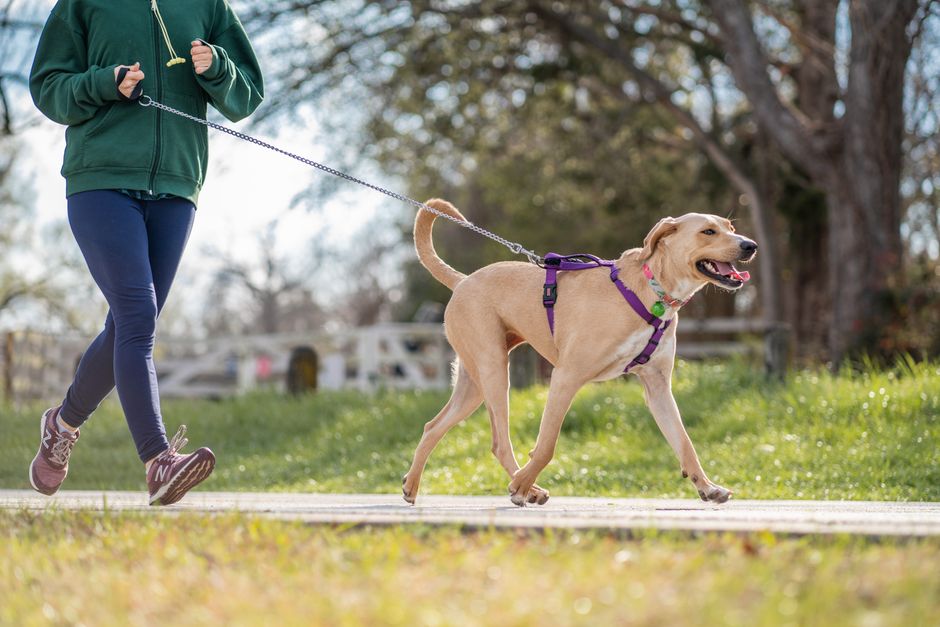
Here’s the honest timeline from my experience with Bruno and from talking to other large breed owners.
Week 1: Chaos. You’ll stop every 10 feet. Your dog will be confused and frustrated. You’ll question everything. That’s normal. The dog is learning that the old strategy (pull hard) no longer works. Stick with it.
Week 2-3: Breakthrough. The dog starts to offer the correct behavior without being prompted. Bruno began walking with a loose leash about 60% of the time. Squirrels still triggered him, but he recovered faster.
Month 2: Maintenance. You need to keep practicing, especially in new environments. A dog that walks perfectly in your quiet neighborhood will pull like crazy at the vet’s office. Generalize the training by practicing in different locations.
If you see zero improvement after three weeks of consistent daily practice, something is wrong. Either your gear is working against you, your reward timing is off, or the dog has a medical issue (hip pain can cause pulling as the dog tries to avoid discomfort). Consult a trainer who specializes in large breeds. A single session can save you months of frustration.
The single most important takeaway: stop trying to out-muscle your dog and start teaching them that walking next to you is the fastest way to get where they want to go.