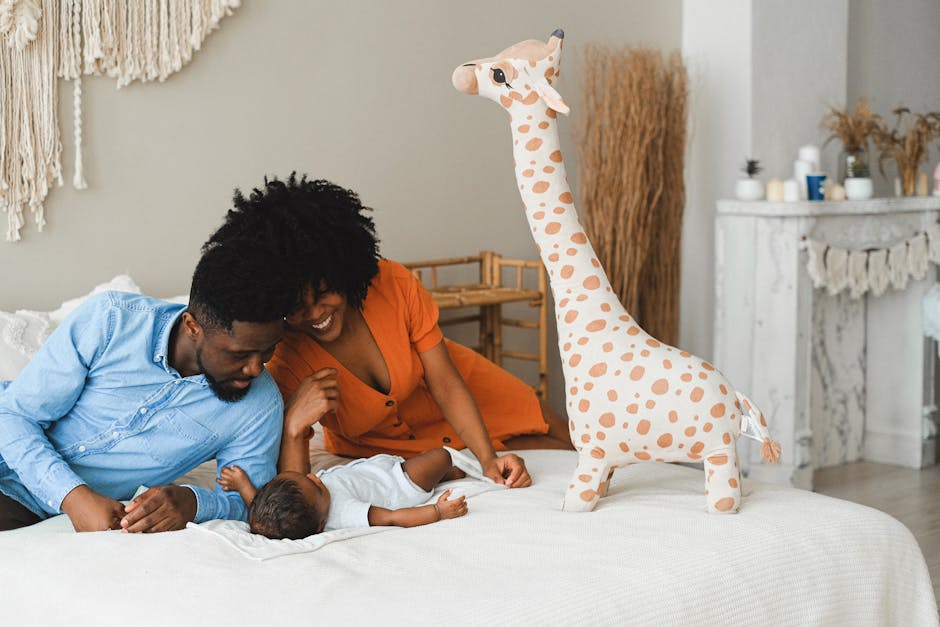
Three weeks into newborn life, most parents don’t want philosophy. They want a plan. The problem: the baby sleep book market is enormous, the methods contradict each other, and nobody tells you upfront which one actually matches your situation — your baby’s age, your household’s sleep deprivation level, and your real tolerance for listening to your baby cry.
Here’s the direct breakdown, organized by what actually matters.
The Book That Fits You Depends on One Question
Before you buy anything, answer this honestly: can you let your baby cry for 20 minutes without going in? Not theoretically. Actually. At 2am. After three weeks of disrupted sleep.
If yes, the Ferber or Weissbluth methods will work for you and you’ll see results within a week. If no — even a little bit of no — you’ll quit halfway through, which is worse than never starting. Inconsistency during extinction-based sleep training prolongs the crying and teaches the baby that crying long enough eventually produces the expected response.
Precious Little Sleep by Alexis Dubner is the best first book for most parents. It maps the full range of options before you commit to one. It’s practical, covers everything from newborns through toddlers, and doesn’t force a single ideology on you. That matters when you’re sleep-deprived and second-guessing every decision.
The Age of Your Baby Changes Everything
Under 4 months (16 weeks adjusted for preemies), traditional sleep training doesn’t apply. Babies at this stage have immature circadian rhythms, tiny stomachs requiring frequent feeds, and neurologically cannot self-soothe reliably. Starting a Ferber protocol at 8 weeks won’t produce the results the book describes — it’ll produce prolonged crying with no learning happening. You’re managing sleep at this stage, not training it.
Between 4 and 6 months is when sleep training becomes genuinely effective for most babies. The 4-month sleep regression — a permanent restructuring of sleep architecture, not a phase that just passes — is the trigger that sends most parents to the bookstore. This window is what the major sleep training books are actually written for.
Past 12 months, you’re dealing with a mix of entrenched habit and emerging toddler assertiveness. Weissbluth’s book handles this age range better than any of the others.
Why Picking the Wrong Philosophy Backfires
A parent who instinctively co-sleeps and responds immediately to every cry will fail with the Ferber method — not because the method is wrong, but because half-implementation is worse than no implementation. Starting a graduated extinction protocol and abandoning it on night two teaches the baby that crying for a specific duration eventually works. You’ve accidentally trained a harder habit.
The reverse is equally true. A parent who tries the Pantley no-cry approach when they genuinely need faster results will hit week three with minimal progress, conclude sleep training doesn’t work, and give up. Both methods work. They require different types of commitment. Know which type you’re capable of before you spend $25 on a book you won’t finish.
Six Sleep Training Books Compared Side by Side
These are the books actually recommended by pediatricians, with research behind their methods:
| Book | Author | Core Method | Minimum Age | Realistic Timeline | Best Match |
|---|---|---|---|---|---|
| Precious Little Sleep | Alexis Dubner | Multi-method — explains and supports several approaches | Birth | Varies by method chosen | First-time parents who want the full picture before committing |
| Solve Your Child’s Sleep Problems | Richard Ferber | Graduated extinction — timed check-ins with increasing intervals | 4–6 months | 5–7 nights | Parents who need to check on baby to emotionally cope |
| Healthy Sleep Habits, Happy Child | Marc Weissbluth | Full extinction — no check-ins, cold turkey | 3–4 months | 3–5 nights | Parents who can commit fully and want the fastest results |
| The No-Cry Sleep Solution | Elizabeth Pantley | Gentle fading — zero extinction, gradual association removal | Birth | 4–8 weeks | Attachment parenting families, extended breastfeeders |
| Good Night, Sleep Tight | Kim West | Sleep Lady Shuffle — gradual physical distancing over 12 nights | 6 months | 10–14 nights | Parents who tried CIO and couldn’t follow through |
| The Baby Sleep Solution | Suzy Giordano | Structured scheduling plus limited crying window | 3 weeks | About 2 weeks | Newborn parents wanting early routine and schedule structure |
Two notes on the table. Weissbluth’s book is the most medically grounded — he’s a pediatric sleep researcher at Northwestern — but it’s a dense read. The early chapters are organized by age, which means you’re reading sections that don’t apply to your baby right now. Ferber is better organized and more executable as a step-by-step guide. If you’re doing extinction-based training, read Weissbluth for context but use Ferber for implementation.
Dubner’s Precious Little Sleep is the only one that covers the full age range without major gaps and explicitly addresses real-world complications: what to do when the baby vomits during CIO, how to handle twins, what changes when a toddler sibling will wake up. Most other books ignore these scenarios entirely. They exist. Having a plan matters.
What CIO Books Don’t Explain Clearly Enough
The core mechanism behind why any sleep training works comes down to sleep associations. Babies cycle through light and deep sleep stages roughly every 45 to 90 minutes. During light stages they briefly rouse — this is normal, healthy, and happens to adults too. Adults roll over and go back to sleep. Babies signal for whatever helped them fall asleep initially.
If a baby falls asleep nursing, they expect nursing when they rouse at 1am and 3am. If they fall asleep being rocked, they expect rocking. Sleep training replaces that external association with the skill of falling asleep independently. The crying during training is protest — communication that the expected prop isn’t arriving — not distress in the clinical sense. With consistent nights, the association shifts.
What the Research Actually Says About CIO Safety
A 2016 randomized controlled trial published in Pediatrics (Gradisar et al., Flinders University) tested graduated extinction against bedtime fading and a control group. Results: no significant differences in cortisol levels, attachment security, or emotional development at 12 months. A five-year follow-up found no lasting psychological differences between groups. Children who underwent graduated extinction showed no increased anxiety, behavioral problems, or attachment disruption compared to controls.
The short version: the crying is hard for parents. The research doesn’t support that it harms babies. Books claiming CIO causes lasting emotional damage are not citing peer-reviewed evidence — they’re extending attachment theory well beyond its intended scope.
Why No-Cry Methods Take Weeks, Not Days
Elizabeth Pantley’s core technique — the pull-off — works by removing the nipple just as the baby crosses from drowsy to fully asleep, gradually shortening the feed-to-sleep connection. It works. But each incremental step requires 3–4 nights of consistency before moving forward, and any backsliding resets progress significantly. One night of nursing fully to sleep after two weeks of the protocol undoes more than it seems.
The No-Cry approach involves tracking sleep logs, mapping nap windows, and adjusting timing daily. It’s more labor-intensive than CIO, just distributed across more nights. Parents who choose it because they think it’s the easier option are consistently surprised. It’s gentler. Not easier.
Kim West’s Shuffle: The Middle Ground Worth Knowing
The Sleep Lady Shuffle from Good Night, Sleep Tight is underused. You sit next to the crib on nights 1–3 without picking up the baby. Nights 4–6, you move to the center of the room. Nights 7–9, the doorway. Nights 10–12, outside the room. Physical presence fades in small enough steps that most babies don’t fully panic. Crying still happens — typically shorter bursts rather than sustained escalation. Two weeks is a realistic timeline for most 6-month-olds. For parents who tried full extinction and abandoned it on night one, this is the practical bridge.
Four Mistakes That Make Any Sleep Training Book Fail

Starting Before the Baby Is Ready
Both Weissbluth and Ferber state minimum ages clearly, but exhausted parents in the newborn fog often skip to the action sections too early. Starting formal sleep training before 16 weeks adjusted age doesn’t produce the clean results the books describe. Neurologically, the baby cannot do what you’re asking. The result is prolonged crying with no learning — exactly the outcome that causes lasting parental trauma and permanent abandonment of the method.
One Parent Following the Method, One Parent Not
Sleep training requires every caregiver to use the same protocol every single night. When one parent does the Ferber check-in intervals and the other picks up the baby immediately during the same waking, the baby receives inconsistent feedback. The extinction process never completes. This is the most common reason families report that the Ferber method didn’t work. It wasn’t actually used. Before starting, both parents need to agree on the specific response and commit to the same number of nights without deviation.
Training During Illness, Regressions, or Major Household Changes
- Starting during a growth spurt means genuine night hunger is present — not a sleep association problem
- The 4-month and 8-month regressions disrupt whatever baseline existed; train after stabilization, not during
- Teething with real pain makes extinction counterproductive — babies cannot self-soothe through acute physical discomfort
- Starting within two weeks of a major change (new daycare, travel, new sibling) adds compounding variables that cloud results
Wait for a stable 5–7 day stretch before beginning. After successful training, your baby’s sleep will look worse again during future regressions. That’s temporary and doesn’t mean the training failed.
Applying Nighttime Protocols to Naps Without Adjusting
Nap training is harder than nighttime training. Sleep pressure is lower during the day, nap windows are narrower, and the overtiredness threshold is lower. Most books address nap training inadequately. Precious Little Sleep is the exception, with a specific nap protocol that differs meaningfully from the nighttime approach. Applying full extinction rules to naps verbatim often produces 90-minute attempt windows with zero sleep and a more overtired baby than you started with.
Which Book to Buy for Your Specific Situation
Your baby is under 4 months
Buy The Baby Sleep Solution by Suzy Giordano. The focus at this stage is scheduling and feeding rhythms that build the foundation for later training. Note: Giordano’s approach requires schedule rigidity that conflicts with demand breastfeeding. Read it as a framework for establishing routine, not a strict rulebook. You’re not solving a sleep problem yet — you’re creating the conditions that make sleep training effective at 4–5 months.
Your baby is 4–8 months and you can handle some crying
Read Precious Little Sleep first to understand the full landscape. Then use Solve Your Child’s Sleep Problems by Ferber for the actual execution plan. The Ferber book has the clearest step-by-step instructions in this category, with specific wait intervals and check-in protocols organized by age and night. Most families see substantial improvement within 7–10 days of consistent implementation.
You cannot tolerate significant crying
Buy The No-Cry Sleep Solution by Elizabeth Pantley and set realistic expectations upfront. Six to eight weeks of daily consistent effort is the real timeline, not the optimistic two weeks often cited. This method works best for babies under 8 months — once a baby is mobile and more assertive, gentle fading is harder to execute without increasing protests. If you’ve used this method for six weeks with no meaningful improvement, consider stepping up to the Sleep Lady Shuffle before concluding sleep training doesn’t work for your child.
Your baby is over 12 months and still waking frequently
Healthy Sleep Habits, Happy Child by Marc Weissbluth covers toddler sleep more thoroughly than any other book here. For this age group, full extinction typically resolves the problem within 3 nights because older babies have more neurological capacity for self-regulation. The challenge past 12 months is more behavioral than physiological, and Weissbluth’s pediatric research background makes his analysis of this stage more credible than the other authors.
The Short Version

Most families with babies 4 months and older: start with Precious Little Sleep for orientation, execute with the Ferber book if you can handle crying, or use the Sleep Lady Shuffle if you can’t. Weissbluth is the most research-backed but the hardest to actually use as a guide. Pantley works — slowly. Pick your method based on your real tolerance, not your aspirational one, and don’t start until your baby is developmentally ready and your household can follow through without breaking protocol mid-week.